
Skip to content

Standalone Home Battery Critical-Load Backup Installation in Bloomington, Texas

Refrigeration circuits get checked against the planned battery load in Bloomington. We help homeowners choose critical circuits that keep vital household functions powered during an outage.

Licensed & InsuredWarranty AvailableSame-Day ServiceUpfront, Transparent Pricing

Quick Summary: Standalone Home Battery Backup in Bloomington, Texas

Standalone home battery critical-load backup installation in Bloomington is provided by Service Electric for homes that need selected circuits supported during outages. The work includes circuit review, load planning, battery connection, and testing, with 24-hour emergency electrical response available from our electricians.

  • What we do: Service Electric installs standalone home battery critical-load backup systems for selected household circuits in Bloomington, Texas.
  • What is included: Circuit mapping, load calculation, panel connection, critical-load selection, testing and verification.
  • What you get: Selected household circuits are connected to a standalone battery system and tested for critical-load backup.

Why should refrigeration circuits connect to a standalone critical-load battery?

Refrigeration circuits often support food storage during an outage, so they need review during critical-load planning. The battery must support the circuit's electrical demand without overloading the backup system. We check the circuit at the panel, assess other priority loads, and explain which circuits fit the planned backup scope.
Standalone Home Battery Backup Installation in Bloomington, Texas

This service is for homeowners who want backup power for selected household circuits. The job focuses on what must keep running, such as refrigeration circuits, lighting circuits, medical equipment, sump pumps, or communication devices.

The key decision is load priority. A larger group of circuits needs more battery capacity and a stronger electrical design, while a smaller group keeps the backup scope focused. We review the panel and circuit layout before recommending which loads belong on the backup system.

Customers should choose critical-load backup when selected equipment matters more than powering the whole home. We don't treat every circuit as essential without checking the load and the battery's intended role.

  • Identify the household circuits that must remain powered during an outage.
  • Review panel space, circuit layout, and available electrical capacity.
  • Complete a load calculation for the planned critical loads.
  • Separate essential circuits from high-demand or nonessential equipment.
  • Test the connected circuits after installation.
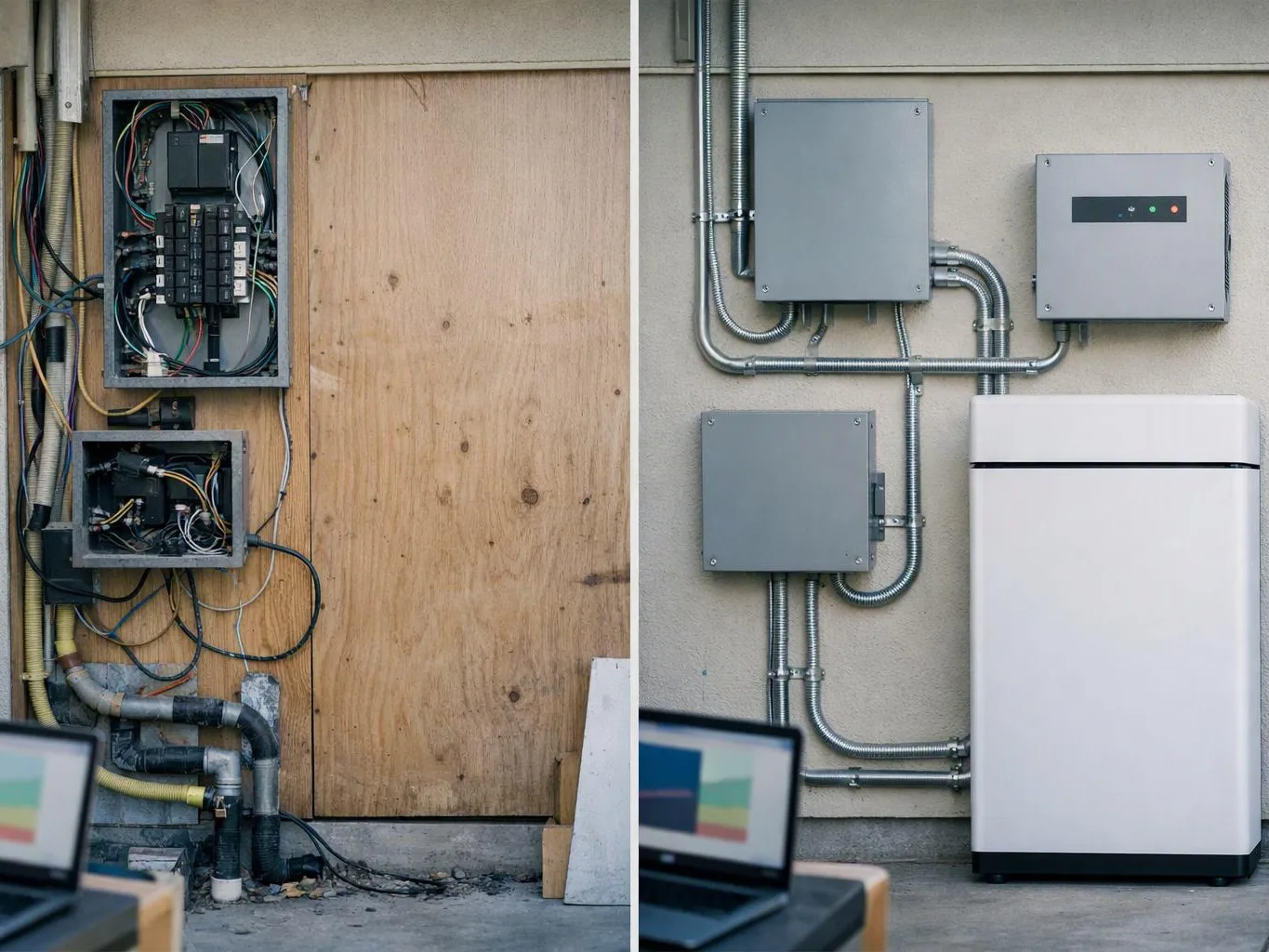
A split view shows messy exposed wiring beside a plywood wall and neat gray electrical boxes with metal conduit around a white cabinet

Service Overview

Standalone home battery critical-load backup installation is a home electrical service that connects selected circuits to a battery for outage power.

  • Critical-load backup differs from whole-home backup because it supports chosen circuits instead of every household load.
  • Service Electric provides this work for homes in Bloomington and surrounding communities.

How We Approach Critical-Load Battery Work

Circuit priority before connection

The first decision is which circuits matter most to the household. Customers who need backup for refrigeration, medical equipment, or communication devices receive a circuit review before we set the connection scope.

Load planning for the battery

A load calculation helps us compare selected circuits with the battery's planned electrical demand. We explain the result in plain terms before work proceeds.

A focused backup limit

This service is the wrong fit when the goal is to power every circuit in the home. Whole-home backup needs a different design review and may require broader electrical work.

Process

How We Install Standalone Home Battery Backup

1

Review the household loads

We discuss which equipment must remain powered and identify the circuits connected to those loads.

2

Map the selected circuits

Our crew traces the circuits at the panel and records the proposed critical-load group.

3

Complete the load calculation

We compare the selected circuit demand with the planned battery backup scope before making connections.

4

Connect the backup circuits

We connect the selected circuits to the standalone battery system according to the planned electrical layout.

5

Test the installed system

We test the connected circuits and explain what the battery supports during an outage.

What Selected-Circuit Battery Backup Changes

Critical household equipment has a defined backup role during an outage.

Circuit mapping gives you a clear record of what the battery supports.

Load planning helps prevent nonessential circuits from taking priority over vital equipment.

A focused backup scope can make the system easier to understand and manage.

Testing confirms that the selected circuits respond as planned after installation.

What Standalone Home Battery Backup Installation Includes

Service Electric provides comprehensive Standalone home battery critical-load backup installation in Bloomington. Here's what you get:

  • We review the electrical panel and identify the circuits proposed for backup.
  • We complete a load calculation for the selected critical loads.
  • We map the circuits so the backup scope is clear before connection.
  • We connect the standalone battery system to the planned household circuits.
  • We test the connected circuits and explain how the selected backup loads operate.

Critical-Load Backup Compared With Whole-Home Backup

The main difference is how much of the home's electrical system receives battery support.

Backup optionCircuits supportedBest fit
Critical-load backupSelected household circuitsHomes prioritizing specific equipment during outages
Whole-home backupThe home's broader electrical systemProjects requiring a wider design and capacity review

The Service Electric Standard

  • Round-The-Clock Assistance
  • Pre-Work Inspection
  • Fault And Options Review
  • Safe Electrical Practices

Questions About Standalone Home Battery Backup

Which household circuits should connect to a standalone critical-load battery?

Refrigeration circuits should be reviewed first when food storage matters during outages. We then assess lighting circuits, medical equipment, sump pumps, and communication devices based on household priorities. The load calculation decides which selected circuits fit the battery plan, and circuit mapping records the final backup group.

How can I tell whether battery backup fits my property?

Battery backup fits a property when selected circuits have a clear priority and the electrical system can support the planned connection. We review the panel, trace the circuits, and calculate the expected load. Whole-home power needs a different design because critical-load backup does not support every circuit.

Which part of the property decides the backup scope?

The electrical panel and connected household circuits decide the backup scope. Panel space, circuit layout, and electrical demand affect which loads can connect. We inspect those points before setting the work scope, then explain any circuits that should remain outside the battery system.

What should stay outside a critical-load battery plan?

High-demand or nonessential circuits should stay outside a focused critical-load plan when they reduce capacity for priority equipment. We review each proposed circuit instead of assuming every household load belongs on backup. The final group reflects the customer's priorities and the load calculation.

When should medical equipment be discussed before installation?

Medical equipment should be discussed before the load review begins. We need to know which equipment requires backup and which circuit supplies it. Our team then compares that demand with the other selected loads and explains how the planned battery scope addresses the household's priority circuits.

Why does circuit mapping matter for battery backup?

Circuit mapping shows exactly which panel circuits receive backup power. It prevents confusion at the panel and gives the customer a clear record of the installation scope. We trace the selected circuits, label the planned group, and test those circuits after the battery connection.

What material changes the installation scope for a battery system?

The panel's wiring, available connection space, and existing circuit layout can change the installation scope. We inspect those materials and connections before work begins. Customers receive a quote based on the actual electrical layout, selected loads, and any required panel work.
Contact

Request a Quote for Standalone Home Battery Backup in Bloomington

Tell Service Electric which household circuits you want to protect, and urgent requests get priority scheduling.

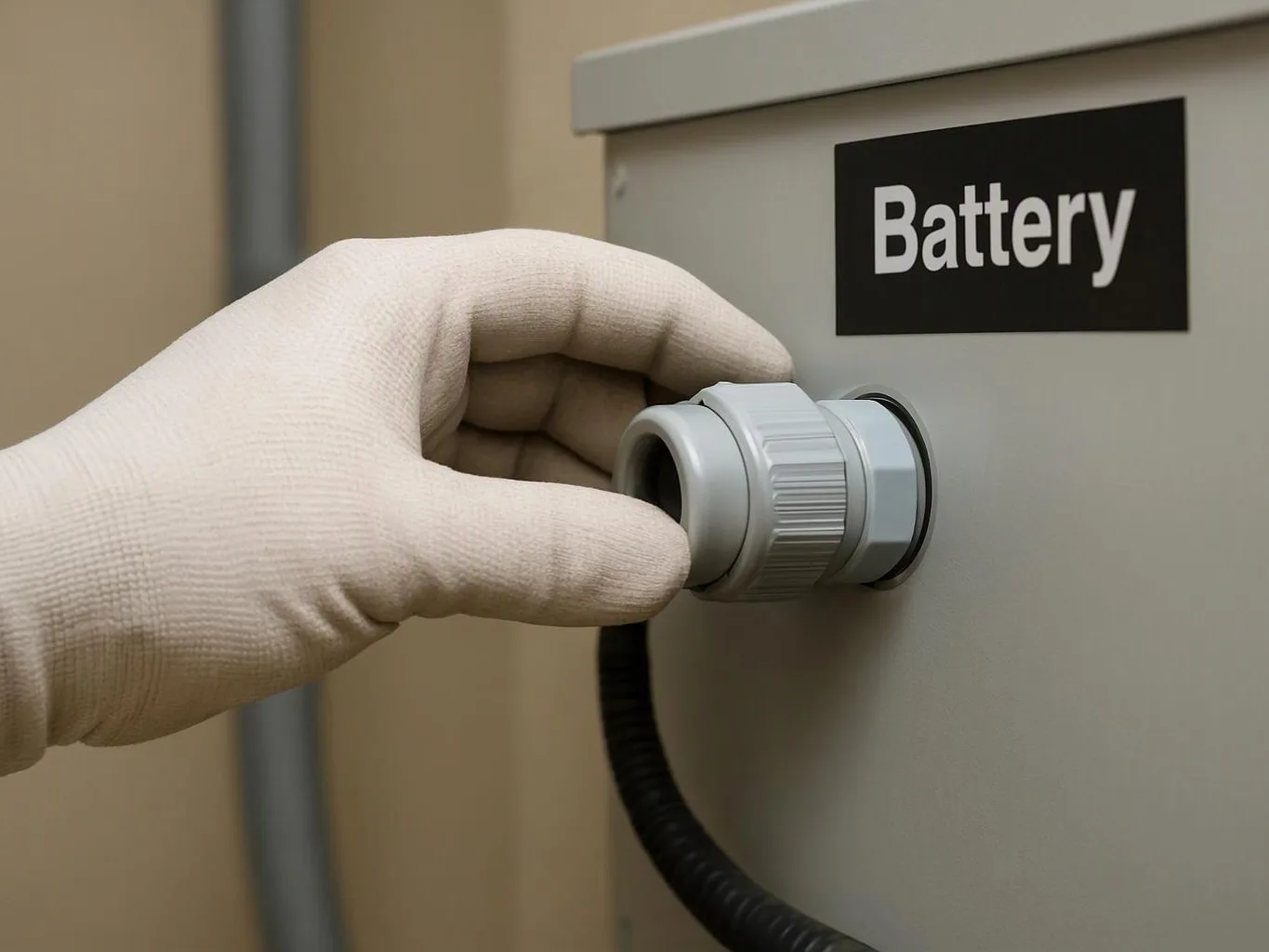
A gloved hand twists a cable connector into a gray box labeled Battery

ZIP Codes We Serve in Bloomington, Texas

77951

Standalone home battery critical-load backup installation in Other Areas

(361) 405-6801