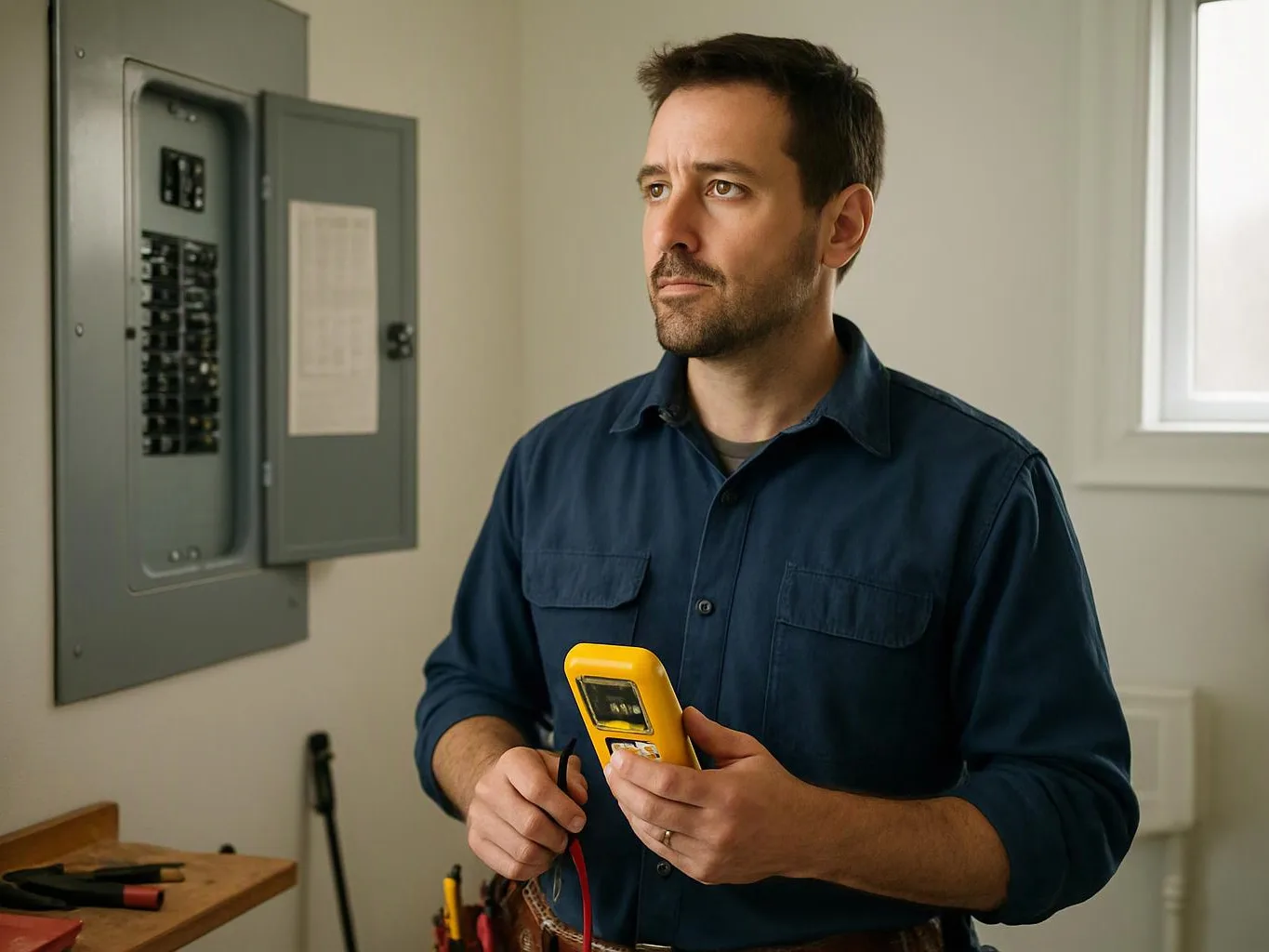
Home Battery Backup Installation Cost Factors and Quote Preparation in Victoria, Texas
Home battery backup installation cost depends on the battery system, critical loads, electrical upgrades, equipment location, and interconnection requirements. Service Electric reviews those factors and prepares a quote based on the property and backup objectives.
Request an Estimate
What Determines Home Battery Backup Installation Cost?
Home battery backup installation cost is determined by the equipment, electrical work, backup objective, site conditions, and interconnection requirements. Service Electric reviews the home battery system, critical loads, electrical panel, inverter, transfer equipment, and installation scope before preparing a quote.
Battery capacity and power output affect which circuits the system can support and how load management is planned. A panel upgrade, new wiring, or changes to the equipment location can expand the electrical work. Recurring severe thunderstorms and tropical weather can create power-disruption risks in Victoria, Texas, so we also match transfer equipment and outage protection to the backup goal.
Home Battery Backup Cost Factors to Prepare For
The cost-factor table shows which project decisions change the work and what information helps us prepare an accurate quote. Each factor connects the home energy system to the electrical infrastructure already on the property.
| Factor | Why it changes the cost | What to prepare |
|---|---|---|
| Battery capacity | The stored energy affects how long selected loads can receive backup power. | Your outage priorities and expected backup needs. |
| Power output | Output affects which appliances and essential circuits can operate together. | A list of loads you want supported during an outage. |
| Critical-load panel | A separate panel can organize backup circuits and change wiring requirements. | The circuits that must remain available. |
| Main electrical panel | Panel capacity, condition, and available space can affect the installation scope. | Panel photos and information about previous electrical work. |
| Inverter | The inverter connects battery storage to the home electrical system and affects system design. | Any preferred battery equipment or existing energy system details. |
| Transfer switch | Transfer equipment controls how backup power connects during an outage. | Your preferred backup circuits and outage protection goals. |
| Wiring | Cable routing and connection points vary with the panel and equipment location. | A basic property layout and access information. |
| Equipment location | Mounting conditions, access, and distance from the panel affect installation work. | Possible indoor or outdoor placement areas. |
| Utility interconnection | Interconnection requirements can add coordination, controls, and documentation. | Existing utility information and any prior interconnection work. |
| Virtual power plant | Participation can require communications equipment, export settings, and utility coordination. | Program details and the battery manufacturer's requirements. |
How Backup Goals Change the Installation Scope
Backup goals change the installation scope because critical-load backup prioritizes selected circuits while broader backup requires a different electrical design. We connect the battery system, backup controls, and transfer equipment to the loads that matter most to your household.
Essential circuits may include refrigeration, communication equipment, lighting, or other selected loads. Whole-home backup requires a load calculation and a design that accounts for the home's broader electrical demand.
Standalone Home Battery Critical-Load Backup
Standalone home battery critical-load backup supports selected circuits through a planned set of backup circuits. We complete a load calculation, review the electrical panel, and identify the transfer equipment needed to separate critical loads from nonessential demand.
Our standalone home battery critical-load backup installation focuses the system on outage protection for the circuits you choose. That focused design can require less electrical modification than a broader backup objective, depending on the existing panel and wiring.
Bidirectional Electric-Vehicle Home Backup Integration
Bidirectional electric-vehicle backup uses a bidirectional electric vehicle and charger to send stored energy to the home electrical system. We review vehicle compatibility, charger placement, backup controls, panel capacity, and the wiring path.
Our bidirectional electric-vehicle home backup integration connects the vehicle, charger, and home controls into one backup plan. The required work depends on the equipment selected and the circuits included in the outage strategy.
Virtual-Power-Plant-Ready Home Battery Interconnection
Virtual-power-plant interconnection connects a home battery to a program that may manage charging, discharging, or export settings. We review utility coordination, communications controls, battery settings, and the interconnection requirements before defining the work.
Our virtual-power-plant-ready home battery interconnection scope accounts for the home electrical system and the program's control needs. Utility approval and export settings can affect equipment selection and installation planning.
What Our Home Battery Backup Quote Includes
Our quote explains the proposed equipment, electrical modifications, installation work, interconnection requirements, and project assumptions. Service Electric begins with a site assessment, load review, battery placement review, and electrical panel evaluation.
We then define equipment selection, the wiring plan, transfer equipment, interconnection scope, and installation labor. The quote also identifies the assumptions that could change if the property layout, panel condition, or backup objective changes.
Five Ways to Control Home Battery Installation Costs
Early planning helps keep the installation scope aligned with the backup objective. These choices give our team clearer information before we prepare the installation quote.
How to Prepare for an Accurate Home Battery Quote
You can help us prepare an accurate quote by gathering your backup priorities, electrical information, equipment preferences, and any electric-vehicle or utility-interconnection details. Clear information helps us match the design to the property.
How Service Electric Prepares a Home Battery Backup Quote in Victoria, Texas
Service Electric can review your property, backup goals, and electrical system to prepare an exact quote for the required installation scope. We can evaluate critical-load backup, electric-vehicle integration, and virtual-power-plant interconnection as separate design pathways.
Our team uses the site assessment and load calculation to define equipment placement, panel work, wiring, transfer equipment, and utility coordination. Request an installation quote through our contact page and tell us which backup objective you want to support.
Questions About Home Battery Backup Quotes
What information should I provide before requesting a home battery backup quote?
Service Electric needs your backup priorities, electrical panel details, property layout, equipment preferences, and any electric-vehicle or utility-interconnection information. We use those details to plan the site assessment and define the installation scope.
Can an electric vehicle be integrated into a home backup system?
Yes, an electric vehicle can be integrated when the vehicle, bidirectional charger, home electrical system, and backup controls are compatible. We review those connections and the selected backup circuits before defining the work.
What does virtual-power-plant-ready battery interconnection involve?
Virtual-power-plant-ready battery interconnection involves utility coordination, communications controls, export settings, and connection requirements for the home battery. We include those factors in the interconnection scope.
Does an existing electrical panel affect the battery installation scope?
Yes, the existing electrical panel affects the battery installation scope because its capacity, condition, available space, and wiring determine how the system can connect. We evaluate the panel before selecting transfer equipment and finalizing the wiring plan.
Which home circuits should be included in critical-load backup?
Critical-load backup should include the essential circuits that support your outage priorities. We review those circuits with a load calculation so the battery capacity, power output, and transfer equipment match the intended backup use.