Planning a Home Battery for Critical-Load Backup
Standalone home battery critical-load backup planning matches essential loads to battery capacity, transfer equipment, operating priorities, and utility requirements; Service Electric evaluates the electrical system and coordinates installation, EV backup integration, or virtual-power-plant readiness.
Request an Estimate
What Is Critical-Load Battery Backup?
Critical-load battery backup is a home energy system that powers selected essential circuits when the utility supply is unavailable. Service Electric evaluates the electrical panel and designs the backup power path around the circuits that matter most to your household.
A standalone home battery stores energy and sends it through a battery inverter when the utility fails. Backup isolation keeps selected circuits separated from the utility so the system can operate safely during an outage.
Which Home Loads Should the Battery Back Up?
The best backup loads are essential circuits whose power requirements and operating priority fit the battery system. We review how each circuit operates so the design supports practical backup priorities.
We group selected circuits into an essential-load panel when that arrangement fits the existing electrical system. The final list depends on the load profile, battery power rating, and the way you want the system to operate.
How Do We Plan Battery Capacity and Circuit Selection?
Battery capacity and circuit selection come from a load calculation that considers starting current, continuous load, operating priority, and the battery system's power rating. Our team uses that information to determine which circuits can operate together during backup.
Battery capacity describes stored energy, while power rating describes how much electrical demand the system can serve at one time. We account for both values so the design does not rely on capacity alone.
What Equipment Connects the Battery to the Home?
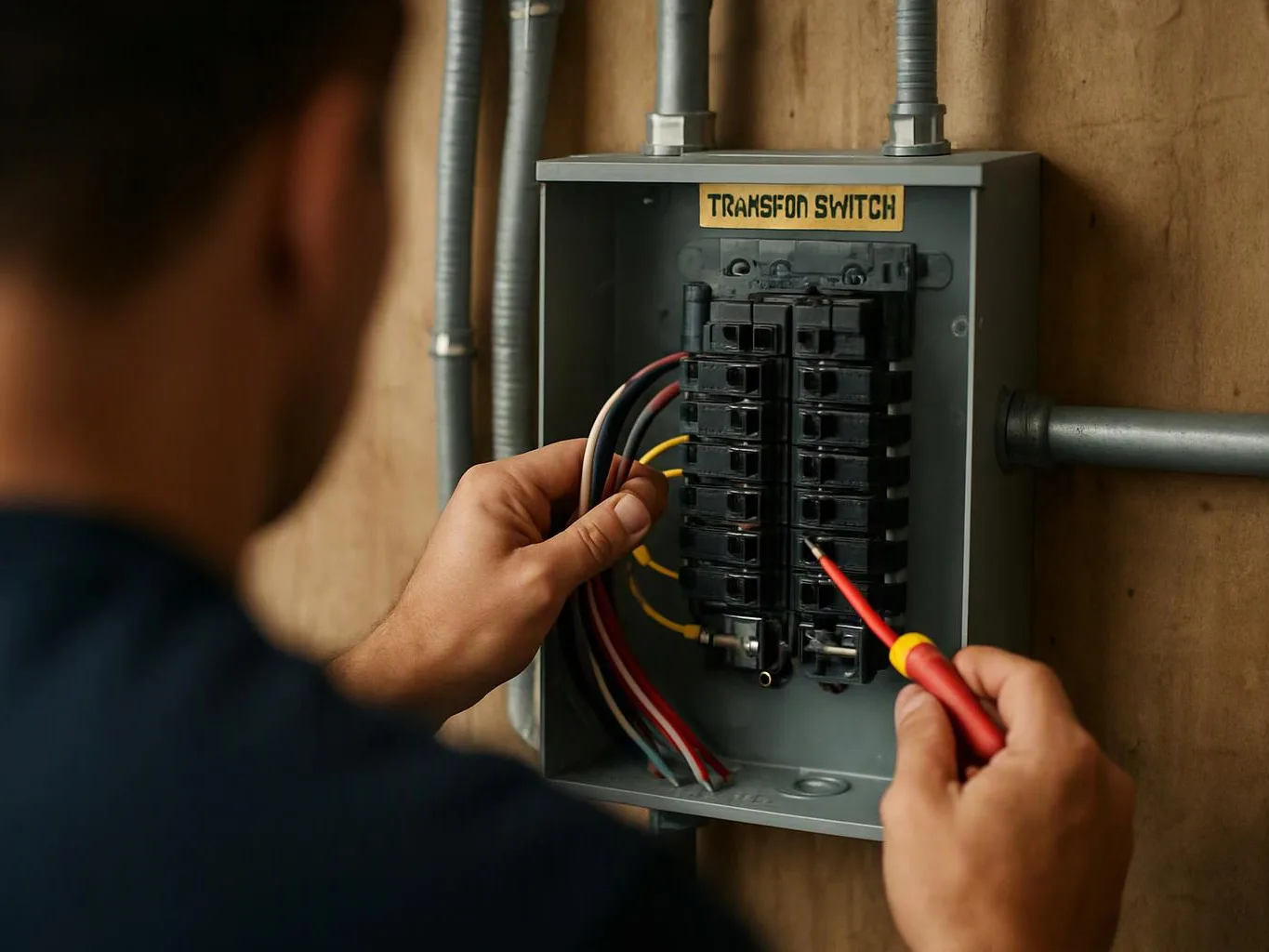
A home battery connects through power-conversion and transfer equipment that isolates selected circuits from the utility during an outage. We coordinate the equipment so islanding, switching, and overcurrent protection work together.
| Equipment | Role in the system |
|---|---|
| Battery inverter | Converts stored battery energy into usable power for the selected home circuits. |
| Automatic transfer switch | Transfers the protected circuits to backup power when the utility supply is unavailable. |
| Load center | Holds and organizes the selected backup circuits. |
| Main service panel | Connects the home electrical system to utility and backup equipment as the design requires. |
| Islanding and overcurrent protection | Supports safe backup isolation and protects conductors and equipment from excessive current. |
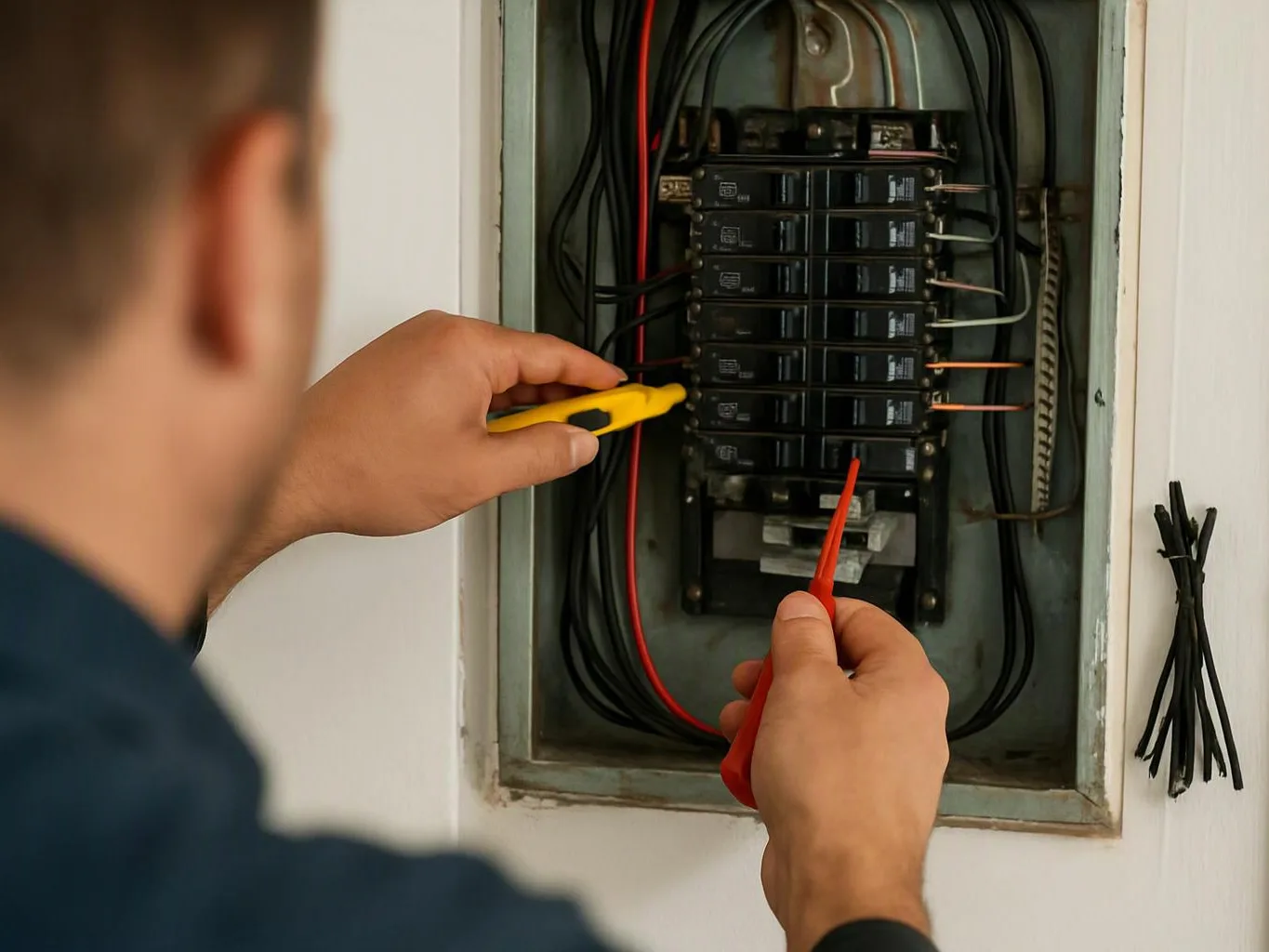
We inspect the panel configuration, available service capacity, and equipment location before finalizing the connection method. These conditions determine the transfer equipment and installation scope.
When Do Battery Backup and Bidirectional EV Integration Work Together?
A home battery and bidirectional EV system work together when the vehicle, charger, controls, and home wiring support coordinated backup operation. We verify compatibility before combining the systems.
We review the vehicle specifications, charger requirements, service capacity, and backup architecture as one electrical plan. This approach helps identify dependencies before installation begins.
How Do the Battery and EV Backup Services Work Together?
The battery and EV backup services work together through a shared electrical assessment, coordinated equipment selection, and an installation plan that defines dependencies and overall project scope. We treat the systems as connected parts of one backup design.
Project cost drivers include equipment selection, panel changes, wiring distance, service capacity, installation conditions, and utility requirements. We include the applicable work in the installation estimate so the quote reflects the planned system.
Both services are useful together when your backup goals include more stored energy, vehicle-to-home backup, coordinated charging, or future system expansion.
What Does Virtual-Power-Plant-Ready Interconnection Require?
Virtual-power-plant-ready interconnection requires equipment, controls, communications, and utility coordination that allow an eligible battery to participate in managed grid programs. We plan the system as a distributed energy resource that can respond to approved operating signals.
A battery inverter, communications gateway, and home energy management system may need to exchange status and control information. Demand response settings must also align with the battery's backup priorities so grid participation does not undermine essential-load protection.
We review utility interconnection requirements, equipment eligibility, communications needs, and operating rules during planning. The final design depends on the utility program and the selected battery system.
Which Planning Choices Change the Project Scope?
Project scope changes with the selected loads, battery operating goals, existing electrical equipment, installation conditions, and interconnection requirements. We use these factors to define the work before preparing an installation estimate.
Backup objectives affect the number and type of circuits included. A design for refrigeration and lighting has different requirements from a design that also supports heating, cooling, pumps, or vehicle charging.
Load profile, service capacity, and panel configuration influence equipment selection and wiring. Equipment location affects routing, mounting, disconnect placement, and access for commissioning.
Utility requirements can add application, communication, protection, or approval steps. We coordinate the electrical design with those requirements so the installation plan is complete.
How Do We Move from a Backup Goal to an Installation Plan?
An installation plan begins with a site assessment and ends with system commissioning. Our team carries the design through each step so the selected equipment matches the home's electrical conditions.
Our estimate reflects the defined installation scope, equipment connections, protection, controls, and coordination required for the project. We explain design dependencies before work begins.
How Service Electric Help Plan the System?
Service Electric assesses the electrical system, defines the critical-load backup design, and coordinates the selected battery, EV, or virtual-power-plant-ready installation. We connect the backup goal to the load calculation, equipment plan, utility process, and commissioning steps.
Our team can plan a standalone home battery critical-load backup installation, bidirectional electric-vehicle home backup integration, or virtual-power-plant-ready home battery interconnection. We inspect the existing electrical equipment and prepare an installation estimate based on the project scope.
Contact us to discuss your backup priorities and arrange an electrical inspection. Our estimate explains the selected equipment, required electrical work, coordination, and project cost drivers.
Request a project estimateQuestions About Home Battery Critical-Load Backup
Can a home battery power the whole house during an outage?
Whole-home backup is possible only when the battery system, inverter power rating, service equipment, and load profile support the entire home. Service Electric evaluates the electrical system and can design critical-load backup when selected circuits are the better fit.
Can an electric vehicle power selected home circuits?
Yes, an electric vehicle can power selected home circuits when the vehicle, bidirectional charger, controls, and home wiring support vehicle-to-home operation. We verify compatibility and connect the system to the planned critical-load panel.
What is the difference between whole-home and critical-load backup?
Whole-home backup serves the home's electrical loads when the system can support the service and demand. Critical-load backup serves selected essential circuits through an essential-load panel, which can focus available battery power on priority equipment.
Can a battery join a virtual power plant after installation?
A battery can join a virtual power plant after installation when the equipment is eligible and the system meets the program's communications, control, and utility interconnection requirements. We review the installed equipment and available program requirements before planning that connection.
Why does a home battery need utility interconnection approval?
Utility interconnection approval confirms that the battery system, inverter, protection, and operating controls meet the utility's requirements for connecting a distributed energy resource. We coordinate the applicable design and documentation so the system can operate safely with the utility supply.