Generator Transfer Switch Installation Mistakes to Avoid
Generator transfer switch installation mistakes include incorrect sizing, unsafe wiring, poor grounding, and improper testing; Service Electric checks the system, corrects installation faults, and connects customers with Portable Generator Transfer Switch Installation.
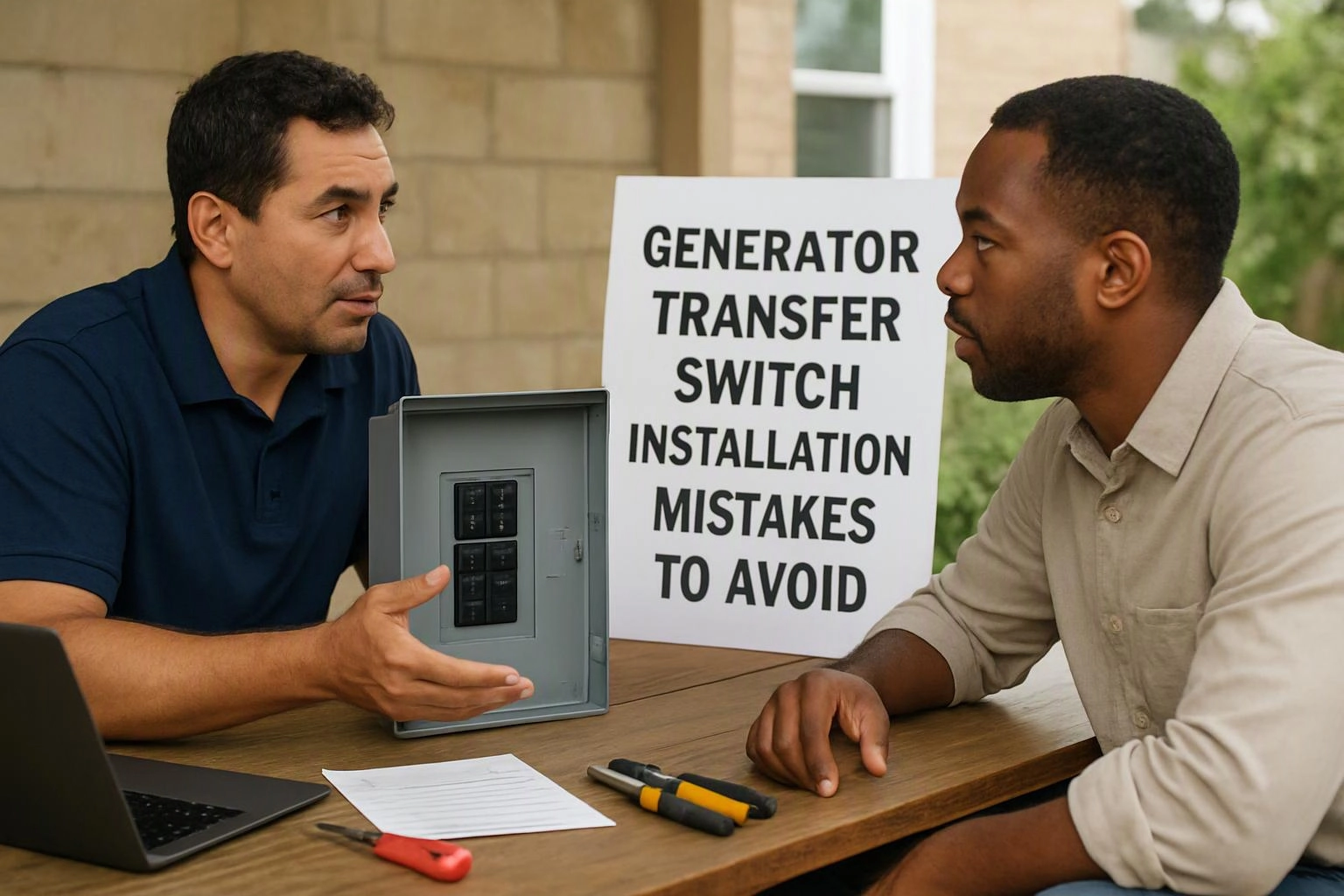
What Makes Generator Transfer Switch Installation Unsafe?
Generator transfer switch installation becomes unsafe when the equipment, wiring, grounding, or switching method cannot keep generator power separated from utility power.
A transfer switch connects a portable generator to selected circuits through the electrical panel. The switch controls whether those circuits receive utility power or backup power. We inspect the complete path so the generator cannot energize wiring that should remain connected only to the utility.
Unsafe work can cause backfeeding, equipment damage, electric shock, or a loss of backup power during an outage. We correct the source of the problem instead of treating a tripped breaker as the whole fault.
Common Installation Mistakes at a Glance
The most important mistakes involve choosing incompatible equipment, miswiring conductors, protecting the wrong circuits, and failing to test the completed system.
Our review follows the safety sequence of compatibility, isolation, load control, conductor termination, grounding, and operational testing.
| Mistake area | What can go wrong | Safer correction |
|---|---|---|
| Transfer switch sizing | The switch may not match the generator or electrical service. | We verify ratings and panel compatibility. |
| Electrical wiring | Incorrect terminals can create heat, faults, or unsafe energization. | We trace and secure every conductor. |
| Neutral conductor and grounding | Incorrect bonding can place current on grounding paths. | We verify the grounding design and neutral treatment. |
| Circuit selection | The generator may be overloaded by connected equipment. | We complete a load assessment and set priorities. |
| Generator inlet | Poor placement can expose the connection to weather or damage. | We inspect location, enclosure, and cable routing. |
| Testing | A hidden wiring fault may appear only during an outage. | We test the switching sequence and selected loads. |
Mistake 1: Choosing an Incompatible Transfer Switch
An incompatible transfer switch does not properly match the transfer switch rating, generator capacity, electrical service, or panel configuration.
This mistake happens when equipment is selected from a label without checking the whole electrical system. Correction costs depend on whether the switch, panel connections, or service arrangement must change. We verify compatibility before recommending repair or replacement.
Mistake 2: Connecting a Generator Without Proper Transfer Equipment
Connecting a generator without transfer equipment can cause backfeeding into utility power.
Backfeeding can energize conductors that utility workers expect to be de-energized. Improvised connections can also damage the generator, panel, or appliances. Correction costs depend on the inlet, wiring, and panel work required. We install or repair the transfer switch and generator inlet so utility power and generator power remain isolated.
Mistake 3: Selecting More Circuits Than the Generator Can Support
Connecting more circuits than the generator capacity can support can overload the generator and trip the circuit breaker.
Starting loads from motors, pumps, and compressors can be higher than their running demand. Correction costs depend on the load assessment, circuit selection, and any critical-load panel changes. We prioritize critical loads and confirm that the starting load fits the backup plan.
Mistake 4: Miswiring Line, Load, Neutral, or Ground Conductors
Miswiring line conductors, load conductors, the neutral conductor, or the grounding conductor can create shock and equipment risks.
The mistake often starts with reversed terminals, loose connections, or conductors placed on the wrong bar. Correction costs depend on how much panel wiring must be traced and rebuilt. We identify each conductor, inspect terminal connections, and secure the wiring according to the transfer equipment design.
Mistake 5: Ignoring Neutral-to-Ground Bonding
Incorrect neutral bonding can place normal current on grounding paths and interfere with protective devices.
The correct arrangement depends on whether the generator is part of a separately derived system and how the grounding electrode system is connected. Correction costs depend on the existing generator grounding and panel arrangement. We verify neutral bonding, the ground bar, and the grounding path before testing the system.
Mistake 6: Installing the Generator Inlet in an Unsafe Location
An improperly located generator inlet box can expose the connection to weather, physical damage, or unsafe generator placement.
Extension cords should not pass through unsafe openings or be routed where they can be crushed. Carbon monoxide risk also increases when a portable generator operates too close to the home or openings. Correction costs depend on inlet relocation, weather protection, and wire routing. We inspect the inlet location and help establish a safer connection and generator placement plan.
Mistake 7: Using Undersized Conductors or Incorrect Overcurrent Protection
Undersized conductors or incorrect overcurrent protection can cause overheating, nuisance trips, and voltage drop.
Wire gauge must match ampacity, terminal requirements, circuit length, and the circuit breaker. Correction costs depend on conductor replacement, routing access, and changes to overcurrent protection. We match the conductors and breaker to the equipment and verify the completed terminations.
Mistake 8: Leaving Critical Loads Out of the Backup Plan
A backup plan is incomplete when critical loads such as a refrigerator, medical equipment, sump pump, or heating and cooling equipment are not considered.
Some equipment also has starting demands that affect generator capacity. Correction costs depend on circuit modifications and whether the existing panel can support a critical-load panel. We perform a load assessment and organize circuit selection around the equipment that matters most during a power outage.
Mistake 9: Skipping Transfer Switch Testing After Installation
Skipping testing leaves faults in the manual transfer switch or automatic transfer switch undiscovered until utility power fails.
A complete test checks generator startup, switching, selected loads, and the return to utility power. Correction costs depend on the fault found and the operational testing needed after repairs. We perform a load test and utility power simulation before treating the installation as ready.
How We Check and Correct a Transfer Switch Installation
Service Electric checks the generator, transfer switch, panel, conductors, grounding, selected loads, and operating sequence before treating the installation as ready.
Our process connects the physical inspection to the way the system must operate during a power outage.
When Should You Call Service Electric?
Call Service Electric when the transfer switch is miswired, the generator trips breakers, the system shows signs of overheating, or you cannot safely verify the installation.
Generator connections carry serious shock and fire risks when the isolation or grounding design is uncertain. Our team can inspect the installation, perform electrical troubleshooting, and connect the repair to generator repair or transfer switch installation work.
What Changes the Cost of Correcting These Mistakes?
The cost of correcting a transfer switch installation depends on the existing panel, transfer switch compatibility, conductor routing, grounding work, and number of circuits requiring changes.
Panel configuration can affect whether we can repair the present wiring or need to modify the circuit arrangement. Transfer switch type, generator compatibility, wire routing, circuit modifications, and labor scope also shape the work required.
We review the installation, explain the correction scope, and provide a quote based on the actual equipment and wiring conditions. Service Electric can also discuss whether a standalone home battery critical-load backup fits the same electrical plan.
How to Prevent Transfer Switch Problems During Future Outages
Generator maintenance, transfer switch inspection, safe fuel storage, load management, and a written backup power plan help prevent avoidable problems during future outages.
Keep the generator and inlet area clear, and follow the equipment instructions for operation and fuel handling. Do not connect new appliances to the backup circuits without checking the available generator capacity.
We recommend including transfer switch inspection and operational testing in your electrical maintenance plan. Our team can review changing critical loads and confirm that the backup power plan still matches the home.
Questions About Generator Transfer Switch Installation
Can a transfer switch prevent generator backfeed?
Yes, a correctly installed transfer switch can prevent generator backfeed by isolating generator power from utility power. Service Electric verifies the switch, inlet, conductors, and operating sequence so the isolation works as intended.
Can an existing transfer switch be repaired after a wiring mistake?
Yes, an existing transfer switch can often be repaired after a wiring mistake when the enclosure and equipment remain suitable. We inspect the damage, trace the wiring, correct the connections, and test the system before returning it to service.
Which circuits should be connected to a portable generator transfer switch?
Critical circuits should be connected to a portable generator transfer switch after a load assessment confirms that the generator can support them. We help prioritize refrigeration, medical needs, pumps, and heating or cooling equipment while accounting for starting loads.
What should I do if the transfer switch trips the breaker?
Stop adding loads and disconnect the generator if the transfer switch trips the breaker repeatedly. Service Electric can inspect generator capacity, circuit selection, wiring, and overcurrent protection to identify the cause safely.
Can a home battery use the same critical-load panel as a generator?
Yes, a home battery may use the same critical-load panel as a generator when the equipment, transfer method, controls, and grounding design are compatible. We assess the existing panel and backup equipment before confirming the arrangement.
Service Electric checks and corrects generator transfer switch installations with attention to compatibility, isolation, load control, wiring, grounding, and testing. Contact us to review your backup power system and request a quote for the work it needs.