Generator Repair Warning Signs
Generator repair warning signs include repeated start failures, unusual noise, fuel or exhaust problems, unstable power, warning lights, and transfer switch issues. Service Electric diagnoses generator and electrical faults, installs portable generator transfer switches, and helps plan safe home backup power.
Request an Estimate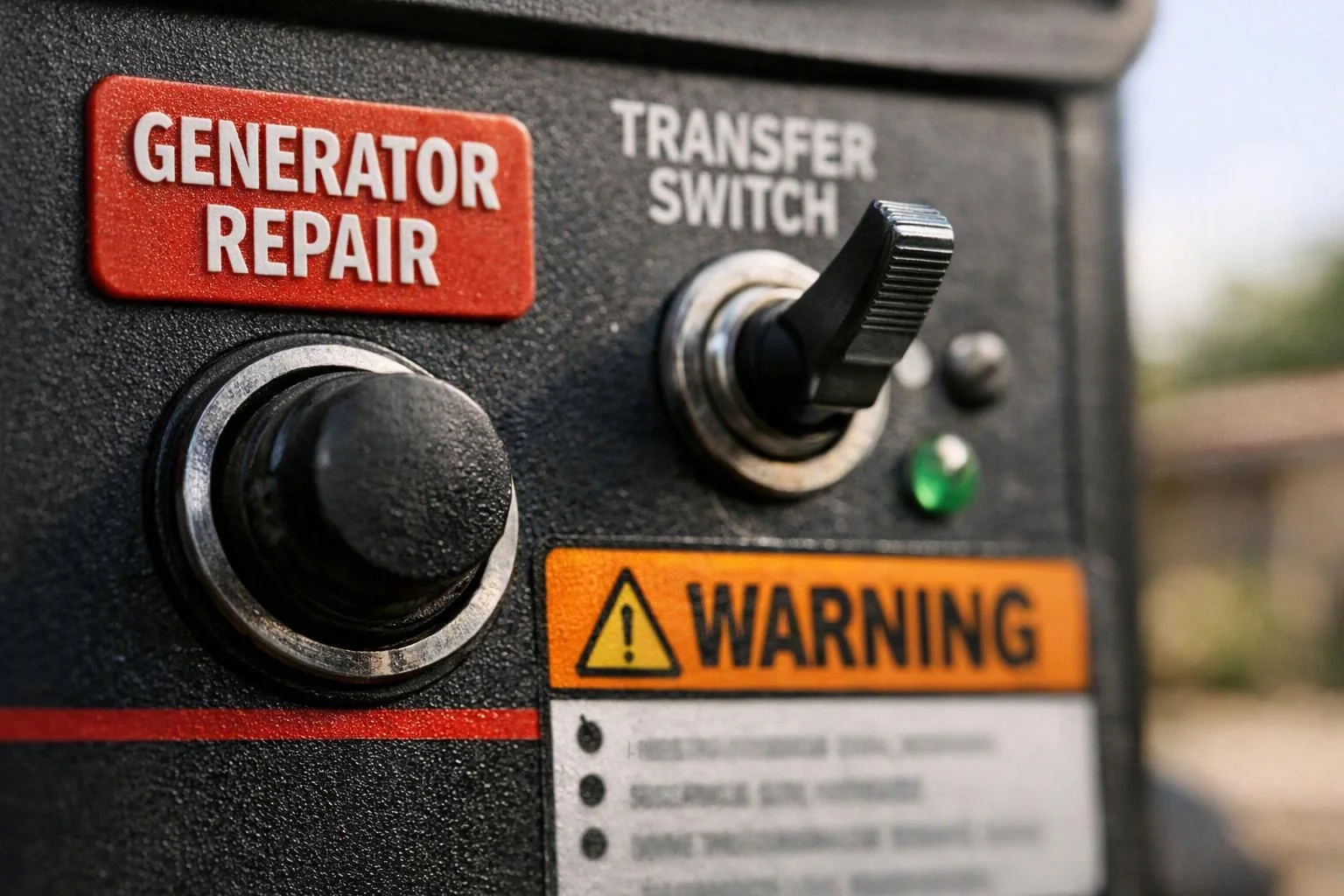
Which Generator Repair Warning Signs Need Attention?
Generator repair warning signs include failure to start, unusual sounds or smells, unstable electrical output, warning indicators, fluid or fuel problems, and transfer switch failures. We inspect the full system because an engine symptom can also point to a battery, wiring, or electrical load problem.
We treat fuel leaks, burning smells, exposed wiring, and unstable output as reasons to stop operation. Contact us for Generator Repair when the cause is not clear or the system does not operate normally.
What Commonly Causes Generator Problems?
Generator problems commonly come from starting-system faults, stale or contaminated fuel, neglected maintenance, damaged wiring, and transfer equipment problems. Our team traces the symptom to the failed part instead of treating every no-start condition as a battery issue.
We test the starting system, fuel system, wiring, and circuit breaker before recommending a repair. That approach helps separate an engine fault from a power-distribution fault.
When Is Generator Troubleshooting Safe to Do Yourself?
Generator troubleshooting is limited to safe visual checks, control settings, fuel supply, and the owner manual. You can confirm that the controls are set correctly, the fuel shutoff is open when appropriate, and the generator circuit breaker is in its normal position.
Turn the equipment off and keep clear of energized wiring, moving engine parts, fuel leaks, and hot exhaust surfaces. Service Electric handles internal repairs, voltage testing, energized wiring, and transfer switch work because those tasks can create an electrical hazard.
Do not remove covers or bypass a safety control to make the generator run. We use the owner manual and system testing to identify the fault without creating a backfeed or shock risk.
How Does Service Electric Diagnose Generator Faults?
Service Electric diagnoses generator faults by inspecting the equipment, testing the starting and fuel systems, checking electrical output, and tracing connected transfer-switch wiring. We explain the failed condition and the work needed before completing the repair.
Diagnostic testing helps us identify whether the generator fault is mechanical, electrical, or related to the backup connection. We then repair the confirmed problem and verify the final operation.
How Can You Prevent Generator Repair Problems?
Generator maintenance reduces repair problems by keeping the starting, fuel, engine, and electrical systems ready for safe use. We recommend following the owner manual and addressing small changes before a power outage exposes a larger fault.
We can evaluate recurring warning signs before they become an outage failure. Safe generator operation also depends on proper placement, ventilation, fuel storage, and connection equipment.
How Does a Portable Generator Transfer Switch Improve Backup Power?
A portable generator transfer switch is electrical equipment that connects selected backup circuits to a portable generator while separating those circuits from utility power. The switch works with the electrical panel to direct generator power to chosen loads.
Selected backup circuits may include essential lighting, refrigeration, communications equipment, or other approved loads. We check the generator capacity, panel arrangement, circuit requirements, and connection method before installing the equipment.
Connecting a portable generator directly to a home without suitable transfer equipment can create dangerous backfeed into utility wiring. Our Portable Generator Transfer Switch Installation work includes checking compatibility, wiring the equipment, and testing safe operation.
What Should You Check After Power Returns?
Utility power should be confirmed before you return the transfer switch to its normal position and remove the generator load. We follow the equipment instructions so the generator and electrical panel change states safely.
We inspect the transfer switch and generator load when a system does not return correctly. Do not force a switch or disconnect equipment that is still energized.
How Do You Plan Home Backup Power Before an Outage?
Home backup power planning starts with identifying essential circuits, matching the generator to the intended load, selecting compatible transfer equipment, and planning safe operation and storage. We use the electrical panel and expected generator load to shape the backup plan.
List the circuits that matter during a power outage, then consider which loads may operate at the same time. We assess the panel, generator connection, fuel storage, ventilation, and generator placement before work begins.
A portable generator may suit selected backup circuits, while a standby generator may support a different system design. We explain the available setup based on the home, the intended loads, and the required transfer method.
What Does Generator Repair or Transfer Switch Installation Involve?
Generator repair and portable generator transfer switch installation involve diagnosing the fault or backup-power need, checking electrical compatibility, completing the work safely, and testing the final setup. We begin with the equipment condition and the way the system is expected to operate.
Our electrical troubleshooting may include the generator engine, starting system, fuel system, battery, electrical output, wiring, electrical panel, and transfer switch. The work required depends on the failed component, access to the equipment, and the backup circuits involved.
We explain the repair or installation scope, complete the approved work, and verify the transfer between utility power and generator power. Contact Service Electric to discuss a generator fault or plan safe home backup power.
Questions About Generator Repair Warning Signs
Can a generator warning light indicate an electrical problem?
Yes, a generator warning light can indicate an electrical problem, engine condition, low oil condition, battery fault, or control-system issue. Service Electric tests the warning condition and connected components instead of clearing the light without finding its cause.
Why does a generator start but not produce power?
A generator can start without producing power because of a tripped circuit breaker, alternator fault, control problem, damaged wiring, or transfer switch issue. We test the electrical output and trace the path to the electrical panel to locate the interruption.
Can a portable generator be connected to a home without a transfer switch?
No, a portable generator should not be connected to a home electrical system without suitable transfer equipment and backfeed protection. We install and test the connection so selected backup circuits remain separated from utility power.
What happens if a generator transfer switch does not return to utility power?
A transfer switch that does not return to utility power can leave backup circuits on generator power or prevent normal power from reaching them. Stop the changeover process and contact Service Electric for transfer-switch testing.
Which home circuits should be connected to generator backup power?
Generator backup power should serve essential circuits that match the generator capacity and transfer equipment. We review the electrical panel and intended generator load to select suitable circuits and avoid overloading the system.
Generator repair and backup-power planning depend on accurate testing, safe connections, and a clear understanding of the loads you need during an outage. Service Electric can help diagnose warning signs, repair generator faults, and plan transfer-switch work.
Related Resources
Emergency Electrician Cost Factors: What Affects 24-Hour Electrical Repair Pricing
What to AvoidEmergency Electrical Repair Mistakes: What Not to Do During a Power Problem
What to AvoidGenerator Transfer Switch Installation Mistakes to Avoid
When You Need ItElectrical Safety Before and After Severe Weather or Water Damage