Emergency Electrical Repair Mistakes: What Not to Do During a Power Problem
Emergency electrical repair mistakes include touching live wiring, repeatedly resetting breakers, using damaged equipment, and ignoring heat or burning smells. Service Electric diagnoses the hazard, isolates the fault, and repairs the electrical system safely.
Request an Estimate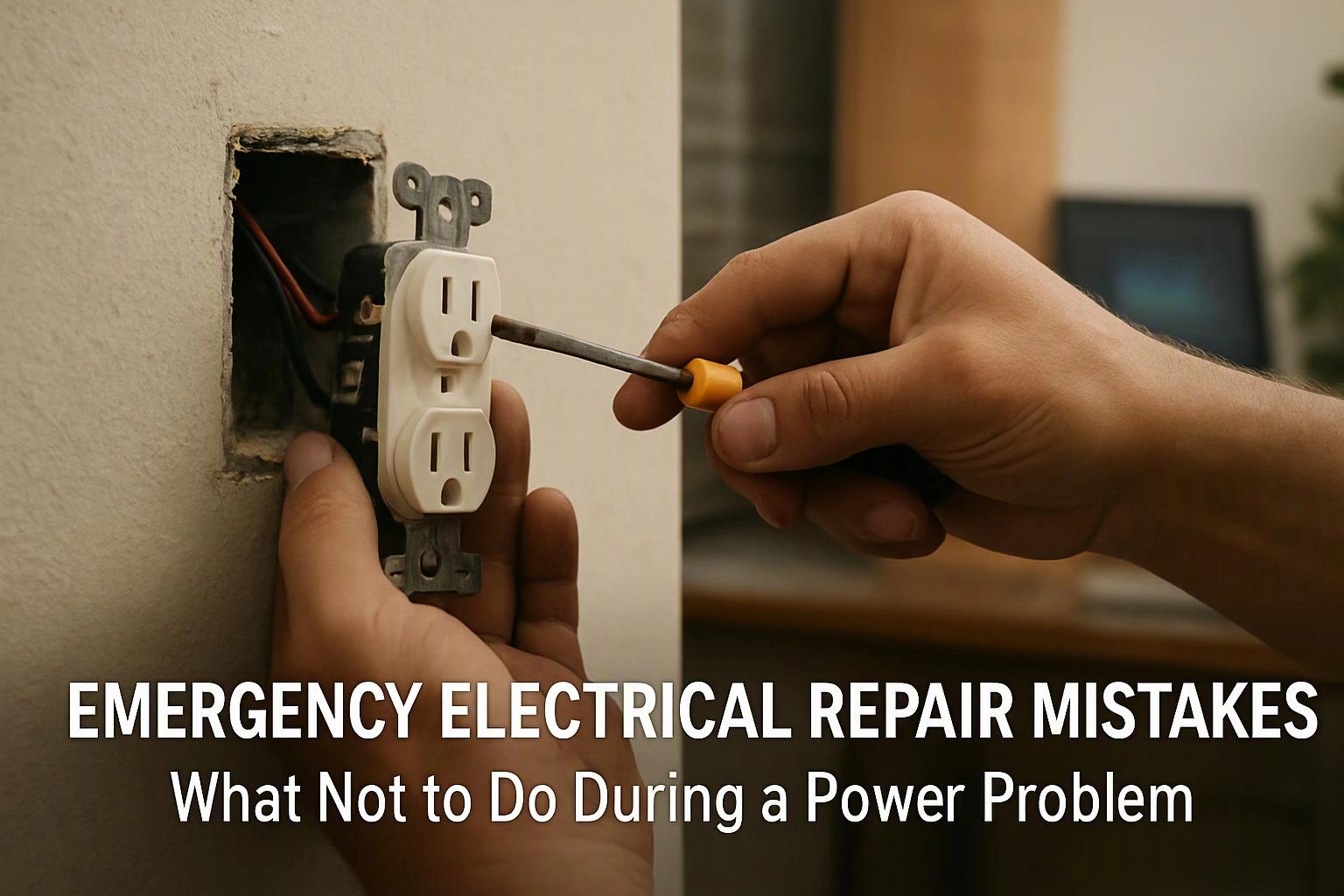
What Should You Do First During an Electrical Emergency?
Electrical emergency response starts with moving away from the hazard, avoiding electrical components, and calling Service Electric when the problem cannot be safely resolved from a safe location.
During a power outage, check whether the issue affects one appliance or the whole property. If you can reach the electrical panel without crossing a wet area, smoke, sparks, or exposed wiring, look at the breaker position without removing the panel cover.
Keep people away from damaged outlets, wet electrical equipment, and fallen or exposed wires. We help identify the danger, complete safe power isolation, and restore the electrical system after the fault is understood.
The Most Dangerous Emergency Electrical Repair Mistakes
Electrical hazards can cause electrical shock, electrical fire, equipment damage, and further power loss. These problems often involve a live circuit, failed circuit protection, water damage, or faulty wiring.
People commonly attempt quick repairs because the outage feels urgent. We focus first on safe isolation and fault diagnosis, then explain the repair scope before work begins.
Mistake 1: Touching Exposed or Wet Electrical Wiring
Exposed wiring and wet electrical equipment can carry current through a person who touches them or stands nearby. Water can also spread the hazard beyond the original fault.
This mistake often happens when someone tries to move a damaged cord or reconnect an appliance quickly. Do not touch the wire, equipment, or nearby water.
The cost of this mistake depends on the wiring damage, the affected equipment, and any resulting property damage. We isolate power from a safe location, inspect the affected branch circuit, and repair the fault after the area is safe.
Mistake 2: Repeatedly Resetting a Tripped Circuit Breaker
A tripped circuit breaker is a warning that the circuit may have an overload, short circuit, damaged appliance, or wiring fault.
Repeated resets can keep current flowing through a condition that caused the breaker trip. Stop resetting the breaker when it trips again, makes noise, or will not hold.
The cost depends on whether the fault is in an appliance, outlet, branch circuit, or panel component. We test the circuit, find the cause of the trip, and complete circuit breaker repair when the breaker itself is damaged.
Mistake 3: Replacing a Fuse or Breaker With the Wrong Rating
A fuse or circuit breaker rating must match the circuit and its conductors. A wrong fuse rating can weaken overcurrent protection and allow unsafe heating.
This mistake happens when someone uses a larger fuse or breaker to stop nuisance trips. The change can hide an overload or short circuit instead of correcting it.
The cost depends on panel damage, conductor damage, and the work needed to correct the protection. We inspect the electrical panel, verify the circuit protection, and replace unsuitable components with properly matched equipment.
Mistake 4: Using Extension Cords as Permanent Wiring
An extension cord is intended for temporary power, not permanent wiring through walls, ceilings, doorways, or wet areas.
Long-term use can lead to overheating, damaged insulation, loose connections, and an overloaded circuit. Concealing a cord also makes damage harder to see.
The cost depends on the damaged cord, connected equipment, and any wiring changes needed for a permanent solution. We assess the load, inspect the circuit, and recommend safe permanent wiring when temporary power is no longer suitable.
Mistake 5: Ignoring Burning Smells, Sparks, or Hot Outlets
A burning smell, electrical sparks, or a hot outlet signals possible overheating, loose connections, damaged insulation, or an arc fault.
People may ignore these signs when the outlet still works. Continued use can increase electrical fire risk and spread damage inside the wall.
The cost depends on the outlet, wiring, connected load, and surrounding property damage. Stop using the outlet and call us so we can isolate the circuit, inspect the connections, and repair the source of the heat or sparks.
Mistake 6: Opening an Electrical Panel Without Knowing the Hazard
An electrical panel can contain an energized component even when some breakers are switched off. Contact with service equipment can cause serious electrical shock.
This mistake happens when someone tries to reach a loose connection or replace a part without understanding which equipment remains energized. Do not remove the panel cover during an emergency.
The cost depends on the panel condition, the fault location, and access to the service equipment. We inspect the panel safely, identify the energized areas, and explain the repair scope before handling the fault.
Mistake 7: Removing a Damaged Outlet or Switch Without Isolating Power
An outlet or light switch can remain energized when the wrong branch circuit is switched off. Removing the device without power isolation creates a direct shock risk.
This mistake often follows visible cracking, melting, or a loose faceplate. Do not pull the device from the wall or rely only on the switch position.
The cost depends on the device, box, branch circuit, and damaged wiring. We isolate and test the circuit, inspect the box and conductors, and complete the outlet repair or switch repair safely.
Mistake 8: Using Water on an Electrical Fire
Water must not be used on an electrical fire because it can conduct electricity and spread the danger.
This mistake happens when water seems like the fastest way to control smoke or flames. Move people away, leave the property when evacuation is needed, and contact emergency services for an active fire.
The cost depends on the electrical damage, smoke damage, water damage, and affected property. After the immediate emergency is controlled, we isolate the electrical system and inspect the fire-damaged wiring and equipment.
Mistake 9: Repairing a Fault Without Finding Its Cause
Fault diagnosis identifies why a breaker trips, an outlet sparks, or power fails instead of only replacing the visible damaged part.
A quick replacement can fail again when the real cause is an overload, short circuit, damaged wiring, moisture, or a faulty appliance. Recurring symptoms mean the circuit needs further electrical troubleshooting.
The cost depends on the fault location, diagnostic work, access, and secondary electrical damage. We test the affected circuit, locate the cause, and recommend repairs that address the source of the problem.
What Does Each Emergency Repair Mistake Cost You?
Emergency repair cost depends on the fault location, the extent of wiring or equipment damage, access to the repair area, and whether the mistake caused secondary property damage. Diagnostic work can also vary when the visible symptom does not reveal the repair cause.
Our quote explains the affected parts, the required testing, the repair scope, and any follow-up work needed to return the system to safe operation.
| Cost driver | Why it matters | What we assess |
|---|---|---|
| Fault location | A panel fault, branch circuit fault, outlet fault, or appliance fault requires a different repair path. | We trace the affected circuit and isolate the source. |
| Damage extent | Heat, sparks, water, and fire can damage more than the first visible component. | We inspect wiring, connections, equipment, and nearby materials. |
| Access to the repair area | Blocked, concealed, or difficult-to-reach wiring can require more diagnostic and repair work. | We determine how safely the affected area can be reached. |
| Secondary property damage | An electrical mistake can add smoke, heat, or water damage to the repair scope. | We document the electrical damage and explain related work that may be needed. |
What Can You Safely Check Before Calling for Electrical Help?
Safe checks can show whether the power outage affects one appliance or the whole property without exposing you to live components. Stop immediately if you see smoke, sparks, water, heat, or exposed wiring.
Use this decision path only when you can stay clear of the hazard and avoid removing any electrical covers.
When to Call Service Electric Instead of Attempting a Repair
Call Service Electric when an emergency electrical repair involves a hazard that cannot be safely isolated from a dry, clear location. Our team diagnoses the fault and keeps the repair focused on safe restoration.
Contact us through Emergency Electrical Repair when any of these conditions occur:
How Service Electric Diagnoses an Emergency Electrical Problem
Service Electric diagnoses an emergency electrical problem by identifying the affected circuit, checking for unsafe conditions, locating the fault, and explaining the repair scope before work begins.
Our team starts with a visual review of the electrical panel, outlets, switches, connected equipment, and visible wiring. We then use circuit testing to separate a panel issue from an appliance fault, branch circuit problem, or damaged conductor.
Once the fault is isolated, we explain which components need repair or replacement and why. We do not treat a recurring breaker trip as resolved until the underlying cause has been addressed.
How to Prevent the Same Electrical Emergency From Returning
Preventive electrical maintenance reduces repeat power problems by addressing overloaded circuits, damaged wiring, weak connections, and unsuitable equipment before they create an emergency.
Our team can review circuits that trip often, outlets that run hot, and equipment that causes power loss. We look for the reason behind the symptom and explain whether the system needs improved circuit protection, wiring repair, or an electrical inspection.
Keep extension cords temporary, avoid using damaged equipment, and do not ignore heat, smoke, sparks, or a burning odor. Prompt electrical troubleshooting helps protect the electrical panel, branch circuits, and connected appliances.
Questions About Emergency Electrical Repair Mistakes
Should I reset a breaker that keeps tripping?
No, a breaker that keeps tripping should not be repeatedly reset. Stop using the affected circuit and call Service Electric so we can test for an overload, short circuit, damaged appliance, or wiring fault.
Can I use water on an electrical fire?
No, water must not be used on an electrical fire. Evacuate when needed, contact emergency services for an active fire, and have us inspect the electrical system after the immediate danger is controlled.
What should I do if an outlet is hot or sparking?
A hot or sparking outlet should not be used. Move away from the outlet, avoid touching it, and call Service Electric to isolate the circuit and inspect the outlet and wiring.
Is it safe to remove a damaged outlet myself?
No, removing a damaged outlet is not safe without confirmed power isolation and circuit testing. Leave the device in place and call Service Electric to inspect the outlet box, conductors, and branch circuit.
What changes the cost of repairing an emergency electrical fault?
Emergency electrical repair cost changes with the fault location, wiring or equipment damage, access to the repair area, diagnostic work, and secondary property damage. Service Electric explains the findings and repair scope so you can request an exact quote for the specific fault.
Get Safe Help With an Electrical Power Problem
Emergency electrical repair should begin with safe isolation and a clear fault diagnosis. Service Electric can help when a breaker keeps tripping, wiring is exposed, an outlet is hot, or an electrical fire hazard is present.
Contact our team to explain the symptoms and request an exact repair scope.
Related Resources
Emergency Electrician Cost Factors: What Affects 24-Hour Electrical Repair Pricing
What It CostsElectrical Panel Upgrade Cost Factors: Size, Capacity, Wiring, and Scope
When You Need ItElectrical Safety Before and After Severe Weather or Water Damage
Everything About ItWhat to Expect During a 24-Hour Electrical Service Call