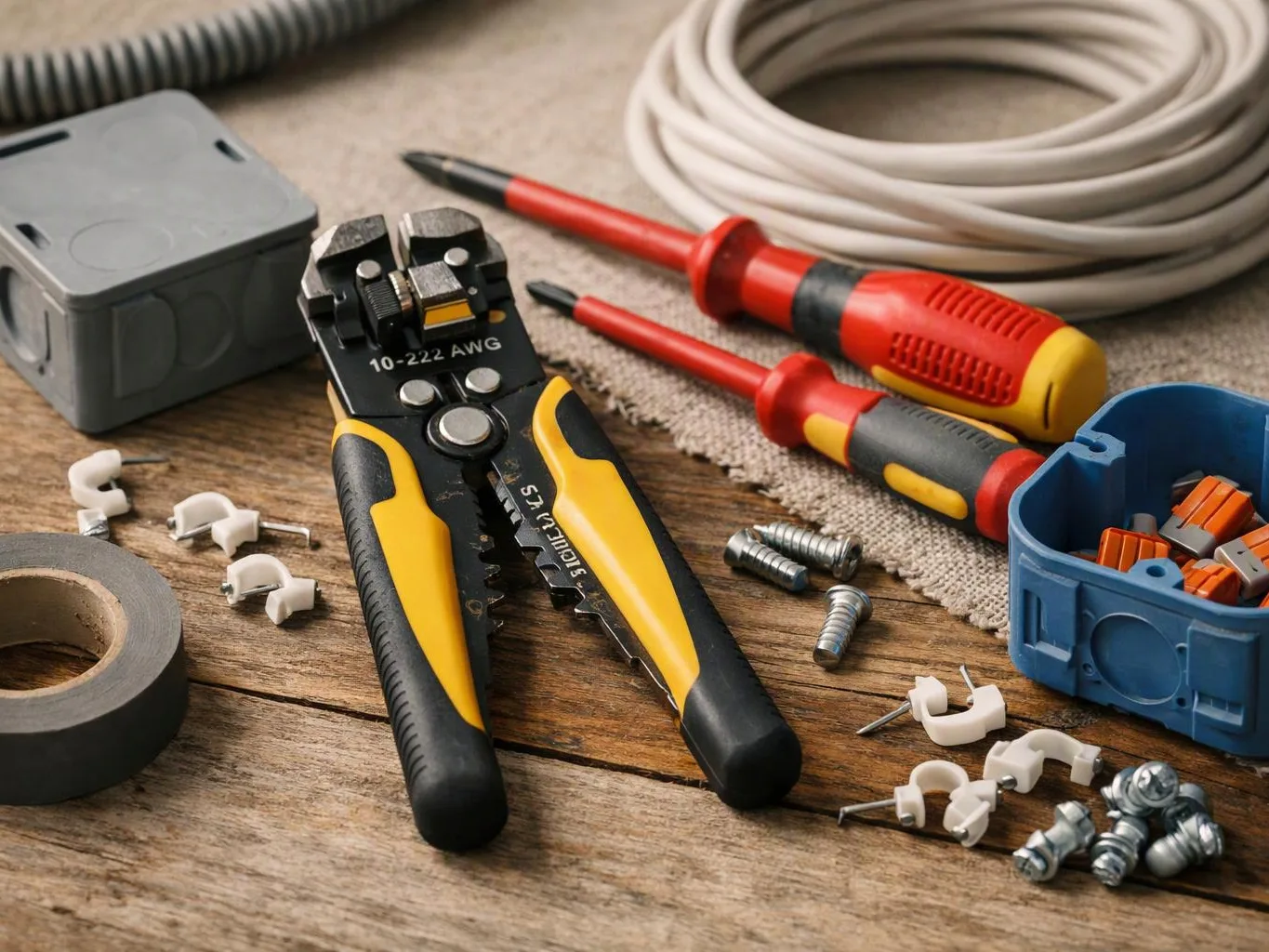
Commercial Electrical Repair and Installation Planning
Commercial electrical repair emergencies require immediate hazard control, safe isolation, clear communication, documented conditions, and a plan for restoration; Service Electric checks the electrical system, identifies repair needs, and plans installations around the building’s operational requirements.
Request an Estimate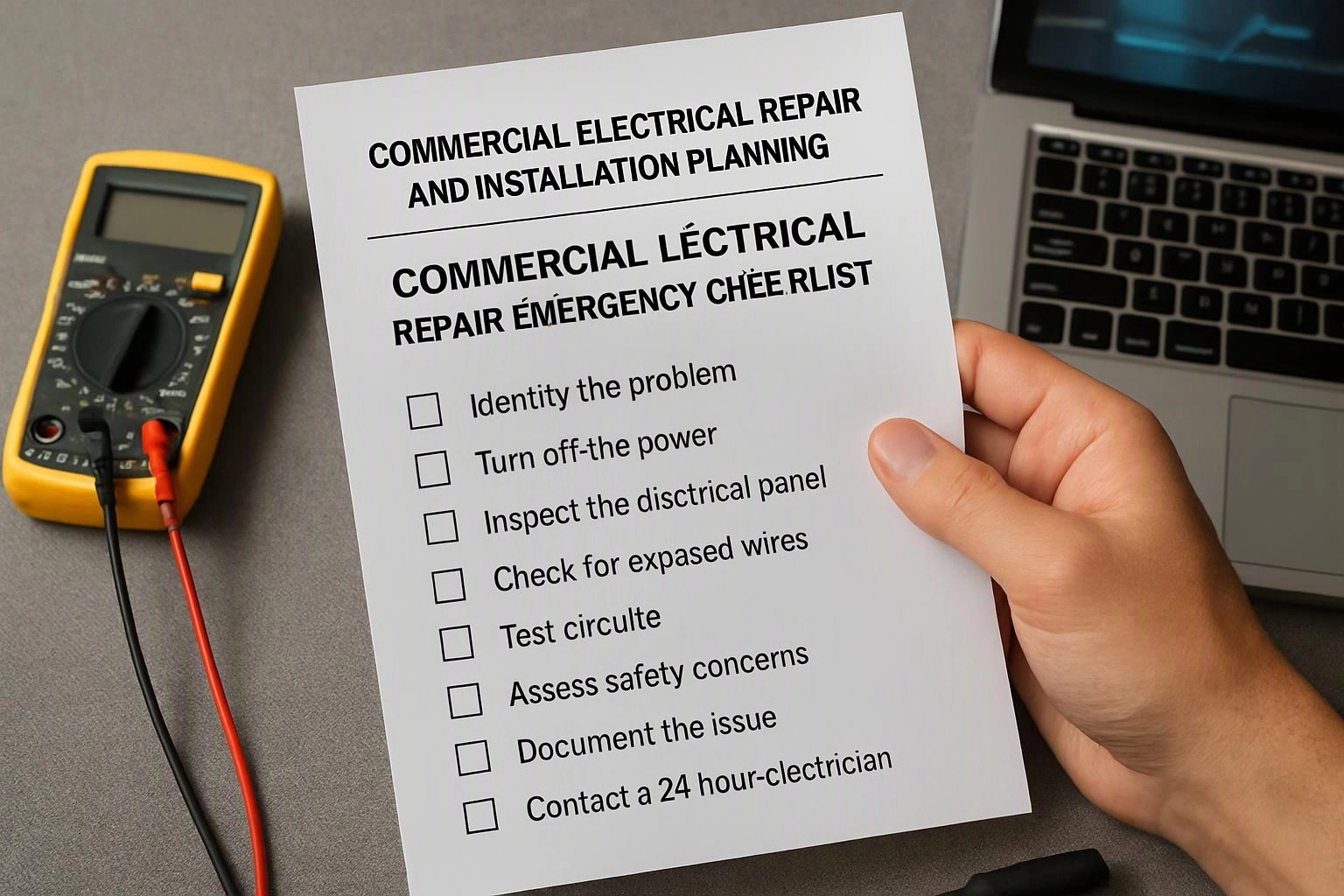
What Should You Do During a Commercial Electrical Emergency?
Commercial electrical emergency response requires people to move away from hazards, isolate power only when it is safe, protect access to the affected area, and contact Service Electric with clear information about the condition.
Do not touch wet equipment, exposed conductors, or damaged wiring. Our crew can assess the hazard, control the affected circuit, and plan the next safe step.
How Do You Use a Commercial Electrical Repair Emergency Checklist?
An emergency checklist helps property managers record visible hazards, protect occupants, identify affected equipment, and give Service Electric useful information before repair work begins.
Our team uses these observations to support circuit isolation and fault diagnosis. A checklist does not replace an electrical inspection when damage or an electrical fault may be present.
What Information Should Property Managers Gather Before Calling for Electrical Repair?
Property managers should gather the affected location, visible symptoms, recent electrical changes, access instructions, and safety concerns before contacting Service Electric.
Describe whether the issue affects one room, a branch circuit, shared building equipment, or wider building operations. Include information about the electrical equipment involved and whether occupants, tenants, or maintenance staff may still be near the area.
Gather available maintenance records, panel labels, recent installation details, and incident documentation. Photos can help explain visible conditions when they can be taken without approaching a hazard.
How Does Service Electric Assess a Commercial Electrical Repair?
Service Electric assesses a commercial electrical repair by controlling immediate hazards, tracing the affected circuit, examining related equipment, and defining the repair scope before work proceeds.
We begin with an electrical inspection of the affected area, electrical panel, branch circuit, and accessible wiring. Our team checks for signs of overheating, damaged insulation, loose connections, water damage, and equipment-related faults.
We then review connected equipment and the conditions that may have caused the problem. The repair scope may include circuit repair, wiring repair, electrical panel repair, replacement of damaged components, or related code corrections.
We explain the condition, identify installation requirements, and document the work needed so the building owner or property manager can make a clear repair decision.
Which Questions Matter When Planning a Commercial Electrical Installation?
Commercial electrical installation planning should address the building’s intended use, electrical load, service capacity, equipment locations, operational constraints, maintenance access, and future expansion needs.
We review the equipment schedule and building use before selecting circuit routes or connection points. The answers below help connect installation decisions to safe operation and future maintenance.
| Planning question | Why it matters |
|---|---|
| What is the expected electrical load? | A load calculation helps match the installation to the equipment demand. |
| Does the service capacity support the planned equipment? | Available capacity affects whether the existing service can support new circuits. |
| Where should the distribution panel and branch circuits go? | Equipment location, circuit routing, and panel access affect installation and maintenance. |
| What equipment connection does each unit require? | Connection details guide disconnects, receptacles, wiring, and circuit selection. |
| How might the building expand? | Future expansion planning can support practical access and reduce disruptive changes later. |
Our team also considers occupancy coordination, access requirements, shutdown needs, and the effect of installation work on building operations. These factors help shape an installation plan that supports both current use and future service access.
What Changes the Cost and Scope of a Commercial Electrical Repair?
Commercial electrical repair cost and scope depend on the fault location, damaged components, access conditions, required materials, related corrections, and the building’s operational constraints.
A fault inside an accessible panel may require a different repair plan from damage concealed in wiring or connected equipment. Water exposure, difficult equipment access, shutdown coordination, replacement parts, and code-related corrections can also change the work required.
We assess these conditions before preparing a repair quote. The quote request should include the affected area, known symptoms, access needs, and any records that can help us define the work accurately.
How Can a Business Prepare for Future Electrical Emergencies?
Emergency preparedness helps a business protect occupants, limit confusion, and give our team better information during an electrical problem.
We can use accurate records to support safer troubleshooting and clearer restoration planning. Good documentation also helps connect emergency response with future installation decisions.
What Should You Include in the Repair and Installation Handoff?
Repair documentation and installation plans should identify the completed work, affected circuits, equipment information, access notes, and maintenance instructions.
Our handoff records can describe the repair scope, circuit identification, replaced components, equipment connections, and conditions that may need future attention. Installation records should also show the equipment schedule, panel information, maintenance access, and occupancy coordination notes.
Clear project records help property managers maintain the commercial building after the work is complete. They also give our team useful background if a later repair, expansion, or service upgrade requires review.
Questions About Commercial Electrical Emergencies and Installation Planning
What should a property manager do if a commercial breaker keeps tripping?
Service Electric checks the affected circuit and connected equipment when a commercial breaker keeps tripping. A repeated trip may indicate an overload, damaged wiring, equipment fault, or another condition that requires circuit isolation and repair assessment.
Can water damage make commercial electrical equipment unsafe?
Yes, water damage can make commercial electrical equipment unsafe, especially when water reaches panels, wiring, outlets, disconnects, or connected equipment. Keep people away from the area and let us assess the equipment before power is restored.
What information does Service Electric need for an emergency electrical repair?
Service Electric needs the affected location, visible symptoms, access instructions, equipment details, recent electrical changes, and known occupant safety concerns. Photos and maintenance records can help us understand the condition when they can be gathered safely.
What should be checked before adding new equipment to a commercial electrical system?
Before adding new equipment, we check the expected electrical load, service capacity, distribution panel, branch circuits, equipment location, connection requirements, and maintenance access. We use those findings to develop installation requirements that support building operations and future expansion.
Commercial electrical repair and installation planning should connect immediate electrical safety with accurate records and practical building operations. Contact Service Electric to discuss the affected system, repair assessment, or installation plan.
Contact Service ElectricRelated Resources
Emergency Electrician Cost Factors: What Affects 24-Hour Electrical Repair Pricing
What to AvoidEmergency Electrical Repair Mistakes: What Not to Do During a Power Problem
When You Need ItElectrical Safety Before and After Severe Weather or Water Damage
What It SolvesWhat to Do When an Electrical Outlet Stops Working