
What Is Voltage Drop?
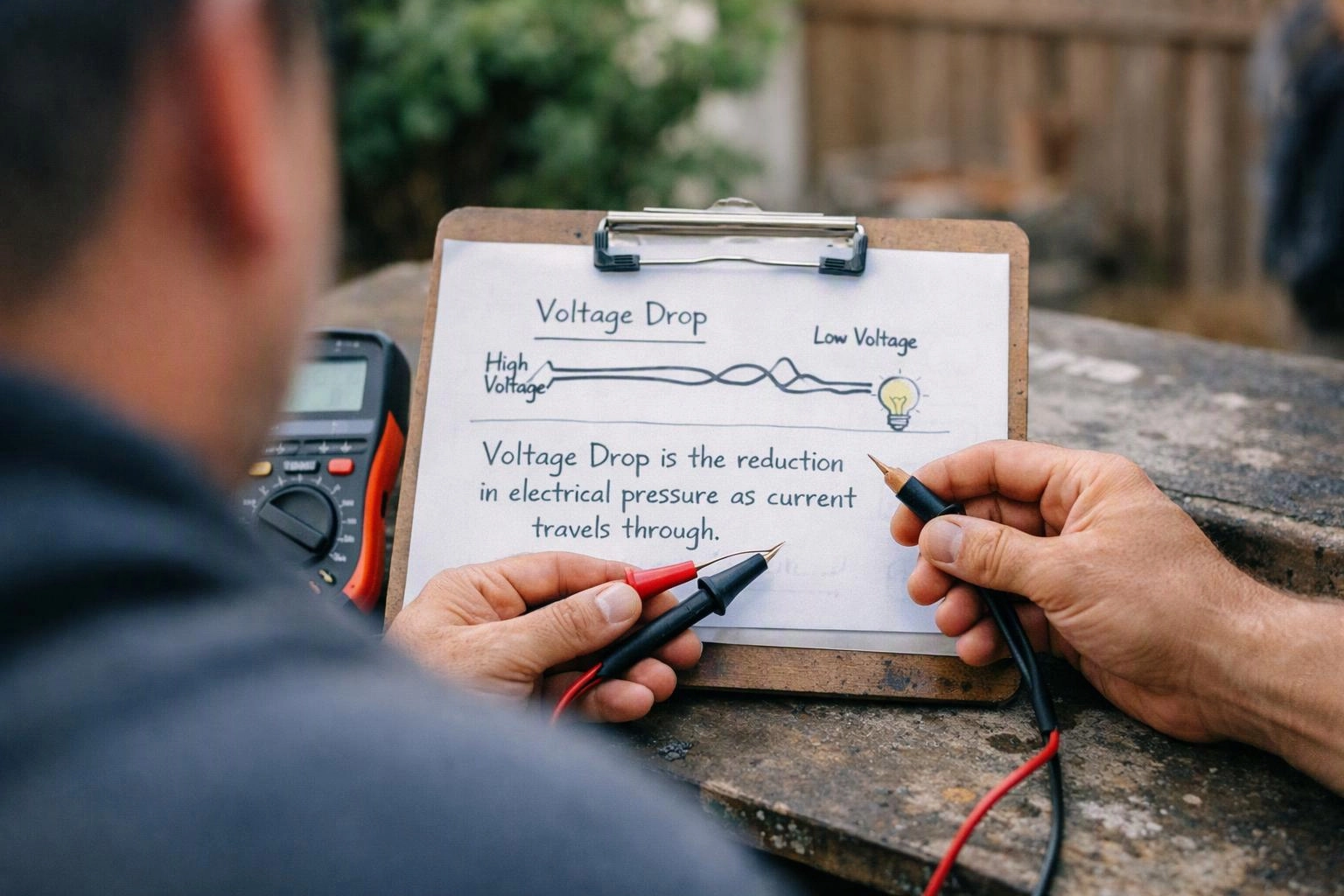
Voltage Drop is the reduction in electrical pressure that occurs as current travels through a conductor and connected components. The reduction results from resistance in the circuit. Excessive voltage drop can prevent equipment from receiving the voltage it needs, causing dim lights, weak motor performance, nuisance shutdowns, or unreliable operation.
Quick Facts About Voltage Drop
Category
Electrical circuit condition
Used for
Electrical troubleshooting
Common confusion
Confused with low incoming voltage
Also called
Voltage Loss
Often discussed with
Electrical Troubleshooting
Key Takeaways About Voltage Drop
- Voltage Drop occurs along energized conductors and connections.
- Longer runs and heavier loads increase circuit resistance effects.
- Voltage Drop is not the same as low utility voltage.
How Voltage Drop Works
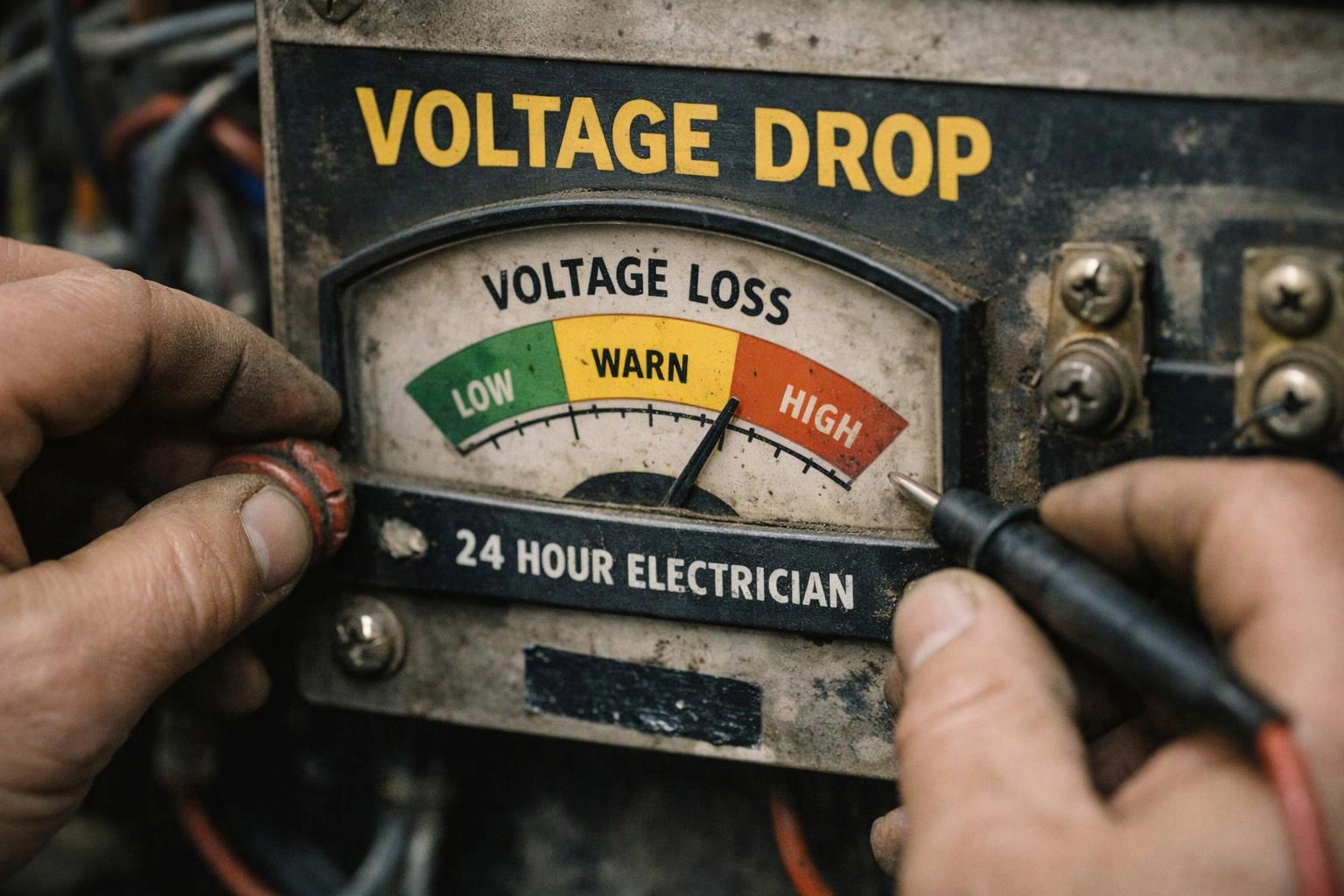
Voltage Drop develops as current moves through conductors, terminals, splices, and protective devices. Each part has resistance, so the load receives less electrical pressure than the source provides. The effect becomes more noticeable when a circuit has a long run, a large connected load, a loose connection, or a conductor that cannot carry the demand efficiently.
Related glossary terms: Wire Gauge, Current Draw, Line Voltage.
An electrician checks voltage at the source and then at the operating load with a meter. Comparing those readings shows where electrical pressure is being lost. A circuit may show normal voltage with no load yet develop a substantial difference while a motor, heater, or lighting circuit operates. Wire Gauge and Current Draw help explain whether the loss comes from conductor sizing, a connection problem, or equipment demand.
From the Service Electric team
When we investigate a suspected Voltage Drop problem, we measure the circuit under operating conditions instead of relying only on a resting reading. We check source voltage, load voltage, connections, and conductor condition. Our team then separates a wiring problem from equipment that is drawing unusual current.
Voltage Drop in Practice: A Real-World Example
A homeowner notices that a detached garage light dims when a motor starts. Electrical troubleshooting can compare voltage at the panel and at the operating motor, then inspect the circuit connections and conductors for the source of the loss.
Related Services
Related Terms
Wire Gauge
Wire Gauge is a standardized way to describe a conductor’s diameter and current-carrying capacity. The gauge…
Current Draw
Current Draw is the amount of electrical current a device or circuit takes from its power…
Line Voltage
Line Voltage is the electrical potential supplied by a power source to a circuit, equipment, or…
Electrical Load
Electrical Load is the amount of power that connected devices and equipment draw from an electrical…
Service Electric
Have Questions About Voltage Drop?
Contact Service Electric for practical guidance on Voltage Drop and related 24 hour electrician work in Victoria.