
What Is Wire Gauge?
Wire Gauge is a standardized way to describe a conductor’s diameter and current-carrying capacity. The gauge identifies how thick the metal conductor is, while insulation type, installation conditions, and circuit demand also affect proper wire selection. Smaller gauge numbers generally indicate thicker conductors, but electrical work must match the complete circuit design.
Quick Facts About Wire Gauge
Category
Wiring measurement
Used for
Selecting conductors for circuits
Common confusion
Gauge does not describe insulation size
Also called
AWG, American Wire Gauge
Often discussed with
Electrical Wiring Installation
Key Takeaways About Wire Gauge
- Gauge describes conductor size, not insulation thickness.
- Thicker conductors generally carry more current.
- Gauge is not the same as wire length.
How Wire Gauge Works
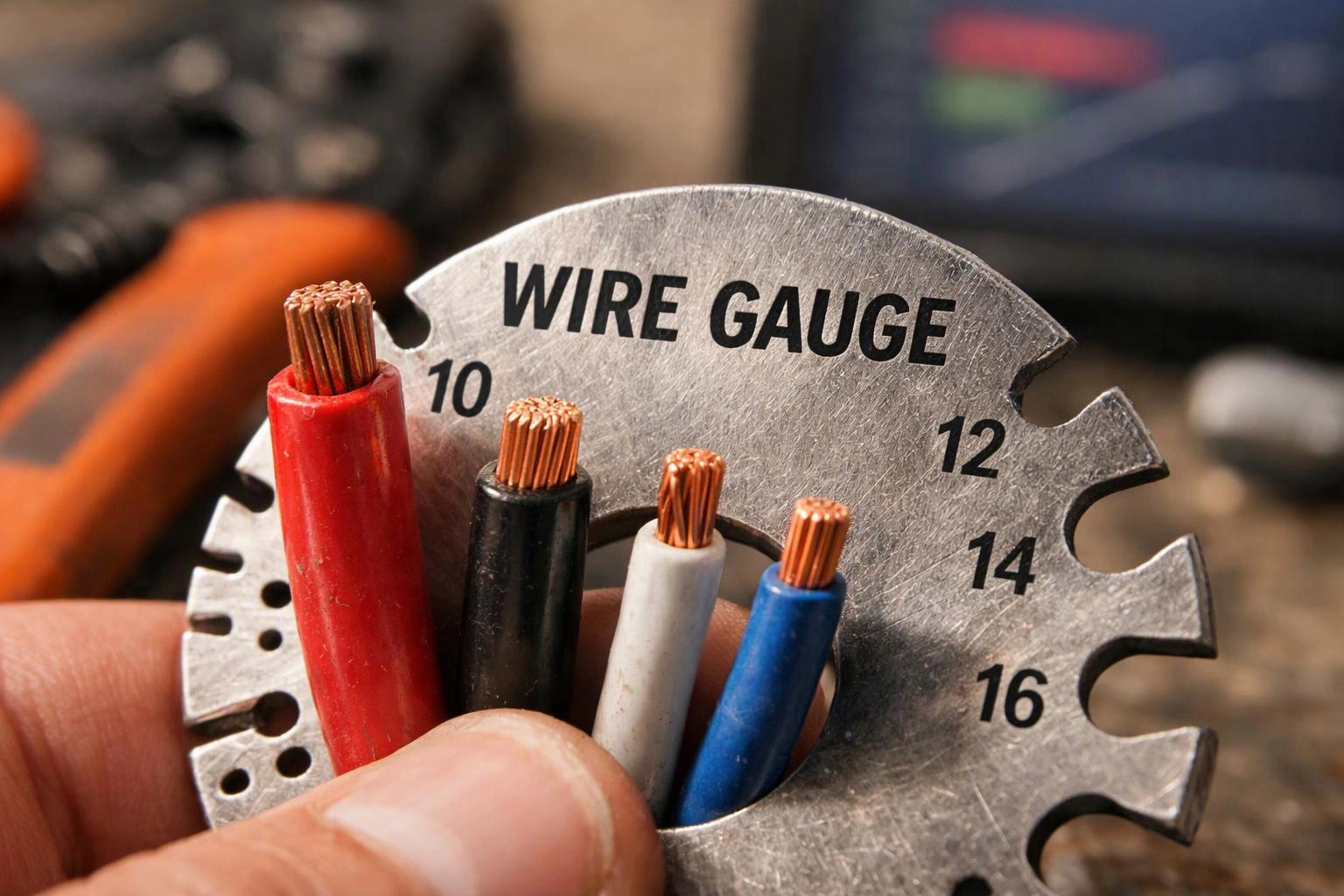
Wire Gauge describes the diameter of the metal conductor inside a cable or wire. A thicker conductor has less electrical resistance and can carry more current under suitable conditions. Gauge markings commonly follow the American Wire Gauge system, while some larger conductors use other sizing methods.
Related glossary terms: Current Draw, Electrical Load, Voltage Drop.
Proper selection also considers the circuit’s load, conductor material, insulation rating, installation method, and expected voltage drop. For example, a long run may need a different conductor choice than a short run serving the same equipment. Voltage Drop describes the reduction in voltage that can occur along a conductor, while a Feeder carries power from a service or panel to another distribution point.
From the Service Electric team
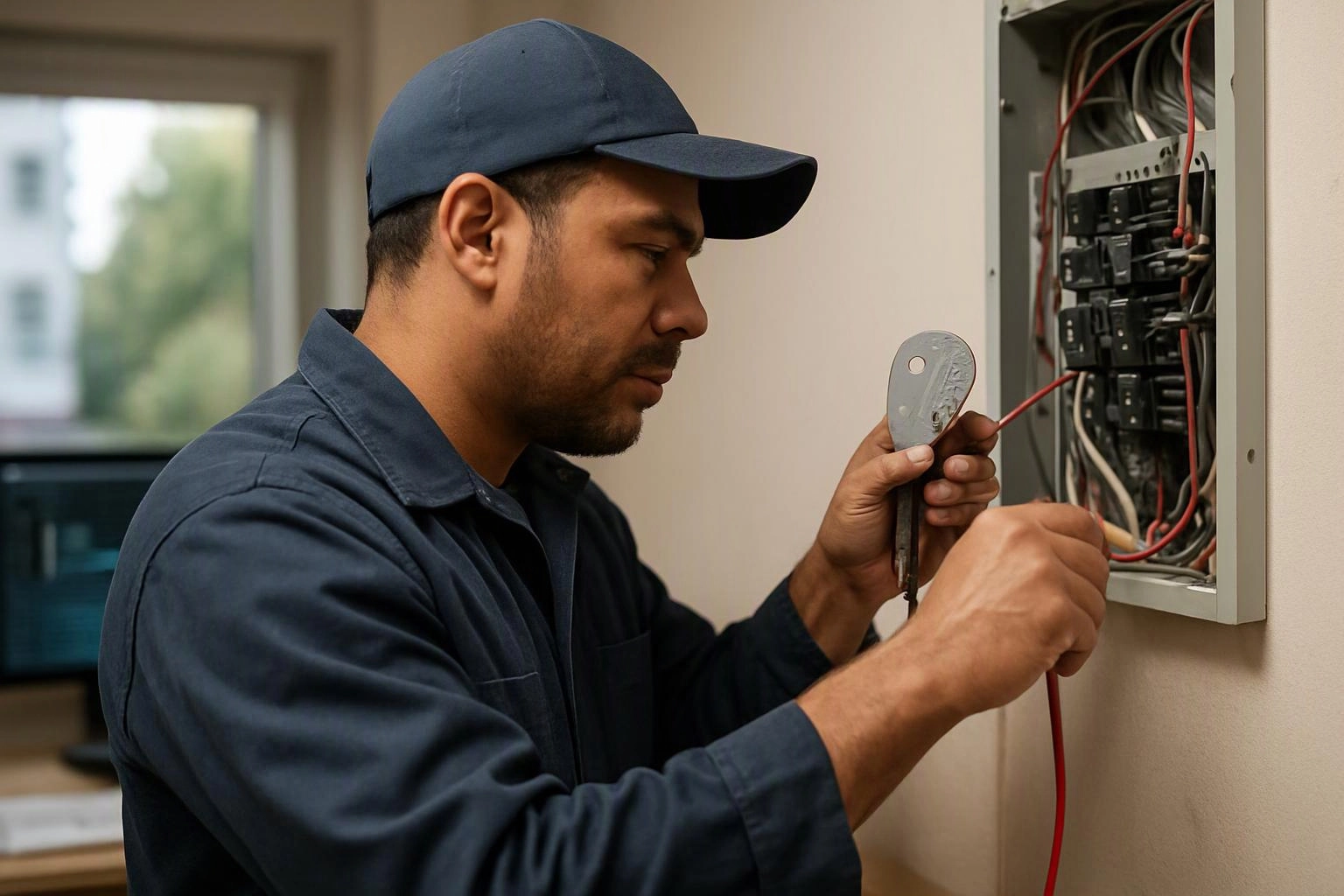
When we install wiring, we review the circuit demand, conductor material, insulation, route, and termination points together. Our team also checks existing wire markings and connection condition before extending or replacing a circuit. That process helps us identify mismatched conductors that may not suit the intended equipment or installation method.
Wire Gauge in Practice: A Real-World Example
During a kitchen wiring installation, the selected wire gauge must suit the circuit serving the planned equipment and the route from the panel. Our team would confirm the conductor marking, connection points, and installation conditions before completing the circuit.
Related Services
Related Terms
Current Draw
Current Draw is the amount of electrical current a device or circuit takes from its power…
Electrical Load
Electrical Load is the amount of power that connected devices and equipment draw from an electrical…
Voltage Drop
Voltage Drop is the reduction in electrical pressure that occurs as current travels through a conductor…
Wire Connector
A Wire Connector is an insulated device that joins electrical conductors and keeps the connection secure…
Service Electric
Have Questions About Wire Gauge?
Contact Service Electric for practical guidance on Wire Gauge and related 24 hour electrician work in Victoria.