
What Is Current Draw?
Current Draw is the amount of electrical current a device or circuit takes from its power source while operating. Current draw describes the electrical demand placed on wiring, breakers, power supplies, and other components. Technicians assess it alongside voltage and equipment ratings when investigating overloads, performance problems, or unexpected electrical behavior.
Quick Facts About Current Draw
Category
Electrical measurement
Used for
Troubleshooting circuit demand
Common confusion
Confused with voltage
Also called
Amperage Draw, Load Current
Often discussed with
Electrical Troubleshooting
Key Takeaways About Current Draw
- Current draw changes with equipment operation and electrical conditions.
- A high reading can point to overload, damage, or a failing component.
- Current draw is not the same as voltage or circuit capacity.
How Current Draw Works

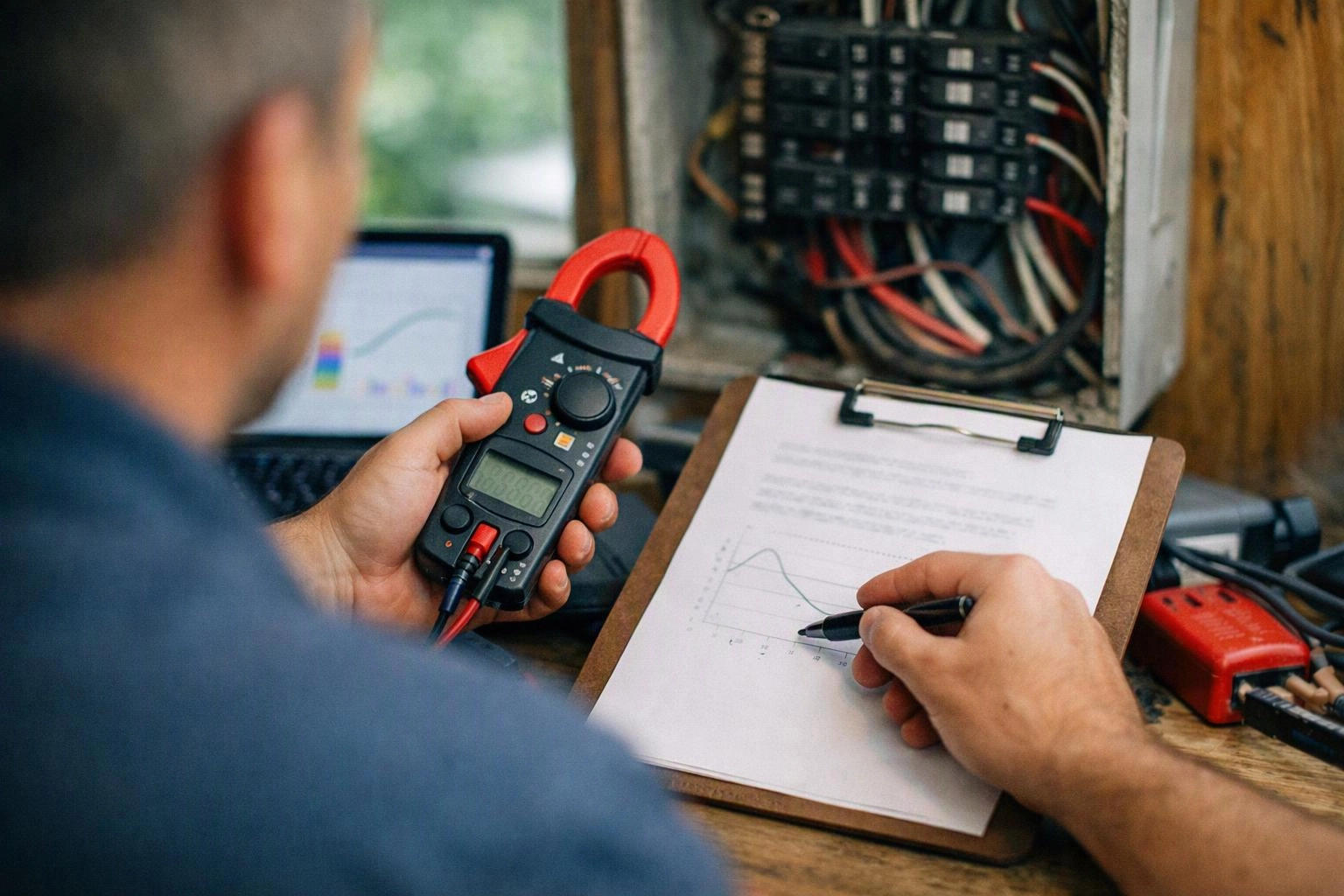
Current draw describes the flow of electricity that an operating device takes from its circuit. A measuring instrument, such as a clamp meter, can check that flow without disconnecting the conductor. The reading can change when a motor starts, a heating element turns on, or a device reaches its normal operating state.
Related glossary terms: Electrical Load, Voltage Drop, Wire Gauge.
Technicians compare the reading with the equipment information and the circuit conditions. A reading that rises unexpectedly can indicate a mechanical problem, damaged wiring, or an overloaded circuit. A low reading can point to an open connection, a failed component, or equipment that is not operating as intended. Current draw works with voltage and electrical load to show how a circuit is behaving.
From the Service Electric team
When we troubleshoot an electrical problem, we check current draw under the equipment's actual operating conditions. We compare the reading with circuit behavior, connections, and equipment information. A changing reading can help us separate a wiring fault from a problem inside the connected device.
Current Draw in Practice: A Real-World Example
A home air-conditioning system may show a higher current draw when its compressor starts. If the reading remains unusually high during normal operation, we inspect the circuit and equipment for conditions that could cause excessive demand.
Related Services
Related Terms
Electrical Load
Electrical Load is the amount of power that connected devices and equipment draw from an electrical…
Voltage Drop
Voltage Drop is the reduction in electrical pressure that occurs as current travels through a conductor…
Wire Gauge
Wire Gauge is a standardized way to describe a conductor’s diameter and current-carrying capacity. The gauge…
Power Factor
Power Factor is a measure of how effectively an electrical system converts supplied power into useful…
Service Electric
Have Questions About Current Draw?
Contact Service Electric for practical guidance on Current Draw and related 24 hour electrician work in Victoria.