
What Is a Neutral Wire?
A neutral wire is a current-carrying conductor that completes an electrical circuit by returning current from a load to the service panel. It normally connects to the grounded neutral point at the electrical service. Neutral wires commonly serve receptacles, switches, lights, and appliances, but they are not interchangeable with equipment grounding conductors.
Quick Facts About Neutral Wire
Category
Circuit conductor
Used for
Returning current from electrical loads
Common confusion
Neutral is not the same as ground
Also called
Neutral Conductor
Often discussed with
Electrical Wiring Repair, Electrical Troubleshooting
Key Takeaways About Neutral Wire
- It carries current back toward the service panel.
- Neutral and ground wires serve different purposes.
- White insulation does not prove a wire is safe to touch.
How Neutral Wire Works
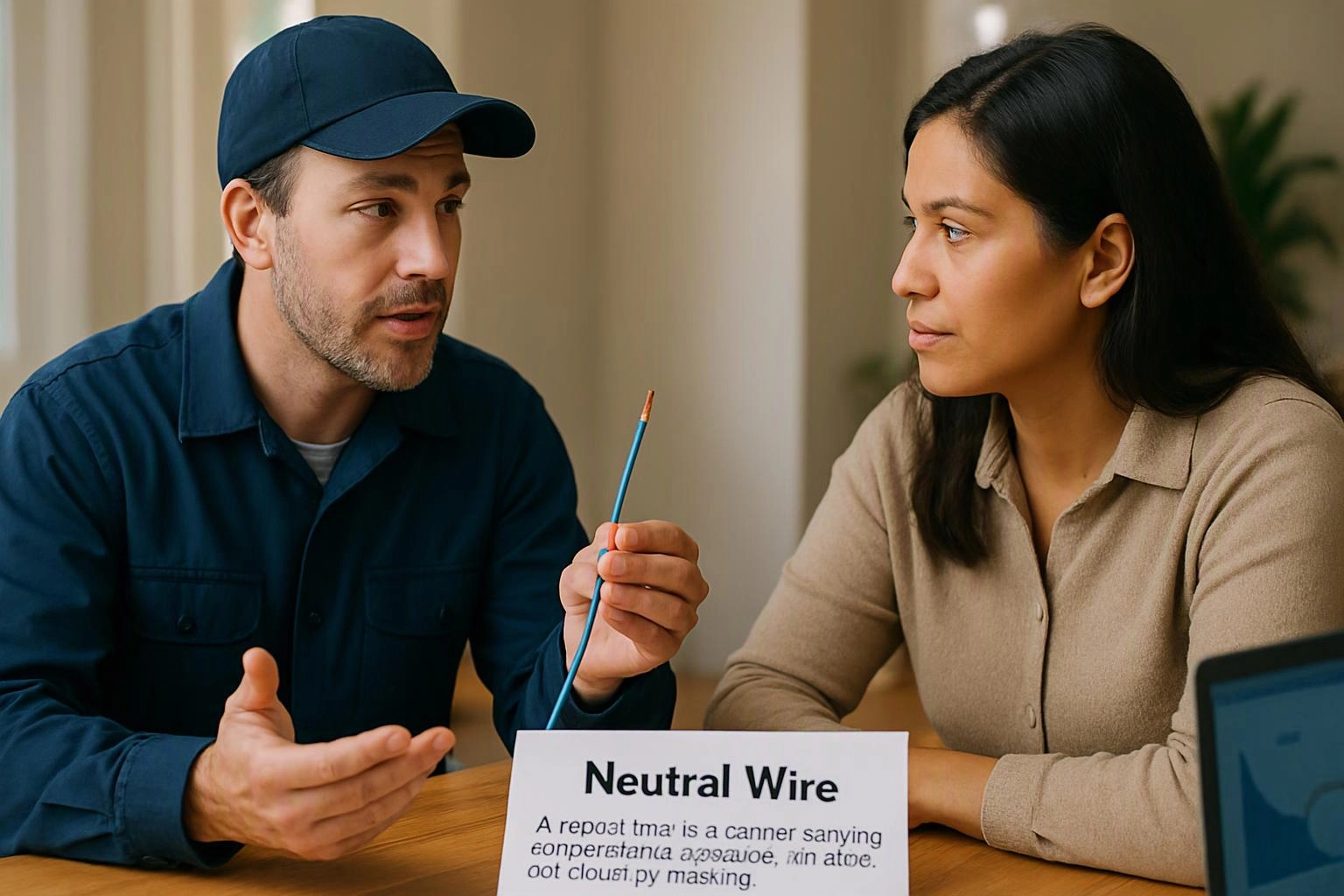
A neutral wire completes the circuit between an electrical load and the service panel. Current leaves the panel on an ungrounded, or hot, conductor, passes through a light or appliance, and returns on the neutral conductor. The circuit needs both paths for normal operation.
Related glossary terms: Grounding Electrode, Bonding, Line Voltage.
Neutral wires are commonly identified by white or gray insulation, although insulation color alone does not establish that a conductor is safe to handle. The neutral connects at the service equipment and may share a termination point with other circuit neutrals. An equipment grounding conductor has a different role. It provides a fault path for protective devices and does not replace the normal neutral return path.
A loose neutral can create unstable operation, flickering lights, or loss of power on part of a circuit. A wiring technician checks connections, conductor continuity, and voltage relationships to identify the cause.
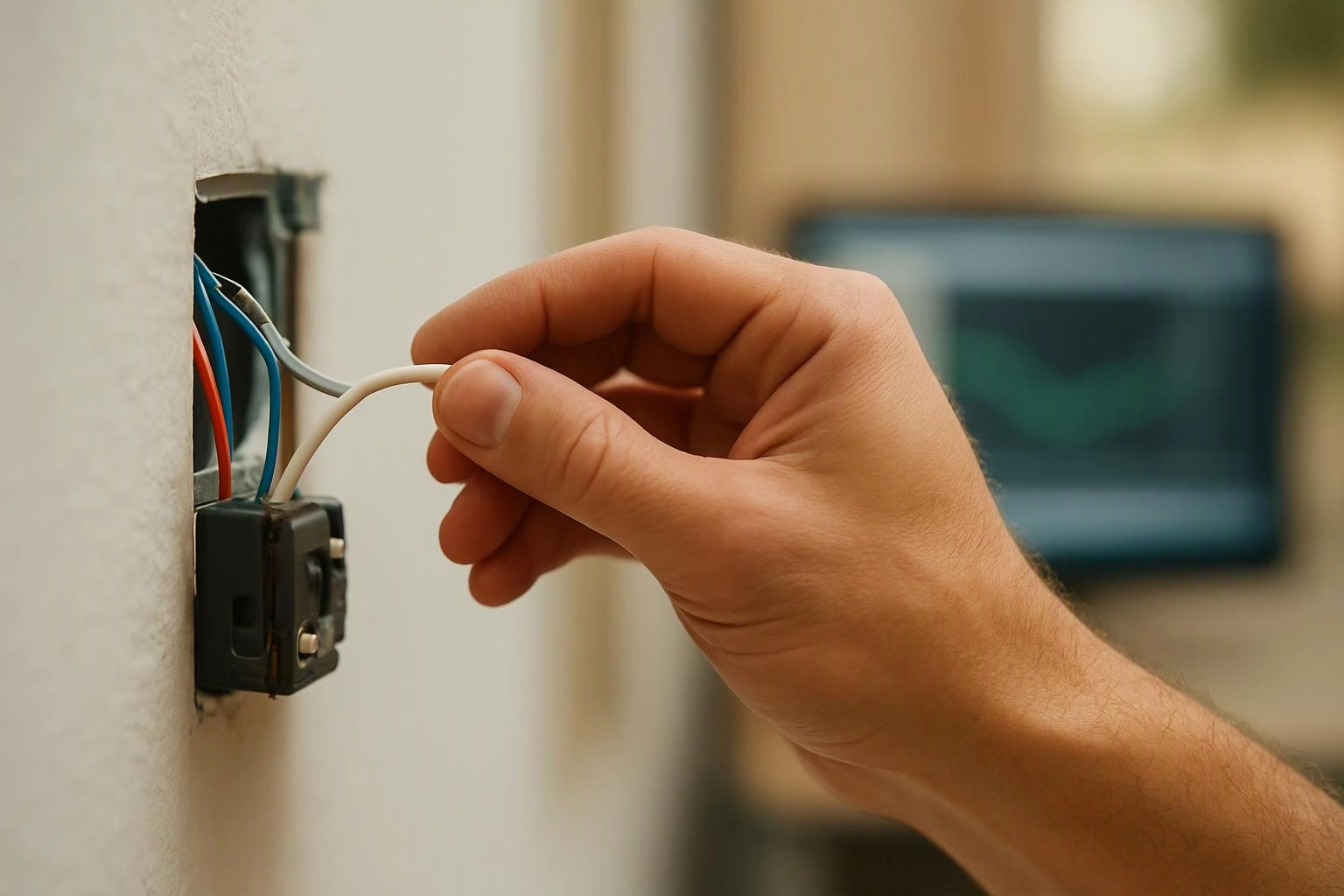
From the Service Electric team
When we inspect a neutral wire, we check its terminations, continuity, and relationship to the circuit conductors. Our team also looks for loose connections, shared neutral issues, and signs of heat damage. We confirm that the neutral and grounding paths serve their proper functions before completing Electrical Wiring Repair.
Neutral Wire in Practice: A Real-World Example
A kitchen receptacle may lose power when its neutral connection loosens, even though the hot conductor remains energized. Electrical Wiring Repair can include tracing the circuit, securing the neutral termination, and testing the receptacle under normal operation.
Related Terms
Grounding Electrode
A grounding electrode is a conductive object that connects an electrical system to the earth. The…
Bonding
Bonding is the intentional connection of conductive electrical parts so they remain at a similar electrical…
Line Voltage
Line Voltage is the electrical potential supplied by a power source to a circuit, equipment, or…
Continuity Test
A continuity test is an electrical check that determines whether a complete conductive path exists between…
Service Electric
Have Questions About Neutral Wire?
Contact Service Electric for practical guidance on Neutral Wire and related 24 hour electrician work in Victoria.