
What Is Bonding?
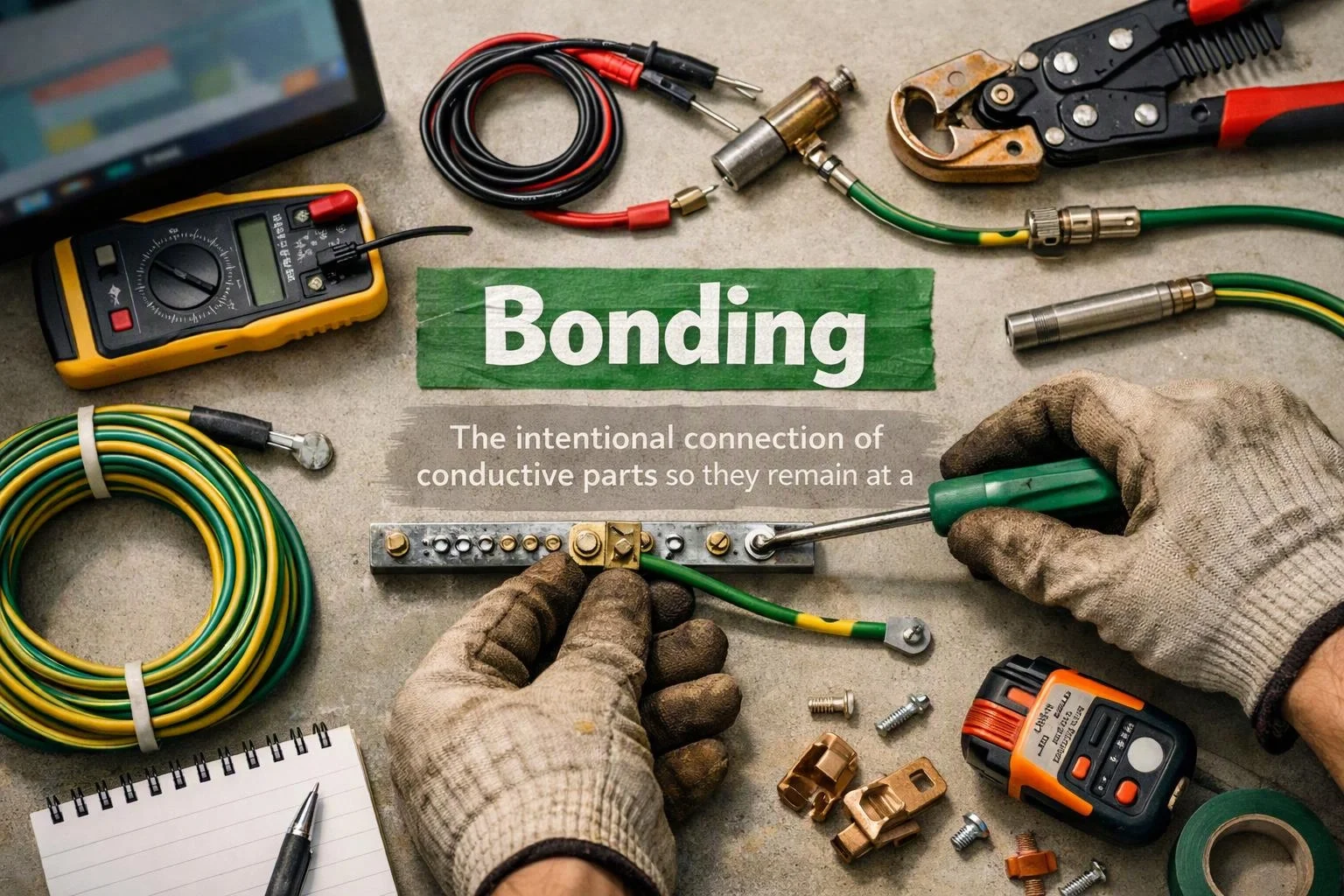
Bonding is the intentional connection of conductive electrical parts so they remain at a similar electrical potential. The connection creates a low-impedance path for fault current, helping protective devices respond when energized conductors contact metal enclosures, piping, or other conductive surfaces. Bonding works with grounding but serves a different function.
Quick Facts About Bonding
Category
Electrical safety practice
Used for
Connecting conductive parts
Common confusion
Grounding and bonding are different functions
Also called
Electrical Bonding
Often discussed with
Electrical Safety Inspection
Key Takeaways About Bonding
- Bonding connects metal parts together.
- Bonding supports fault-current paths.
- Bonding is not the same as grounding.
How Bonding Works
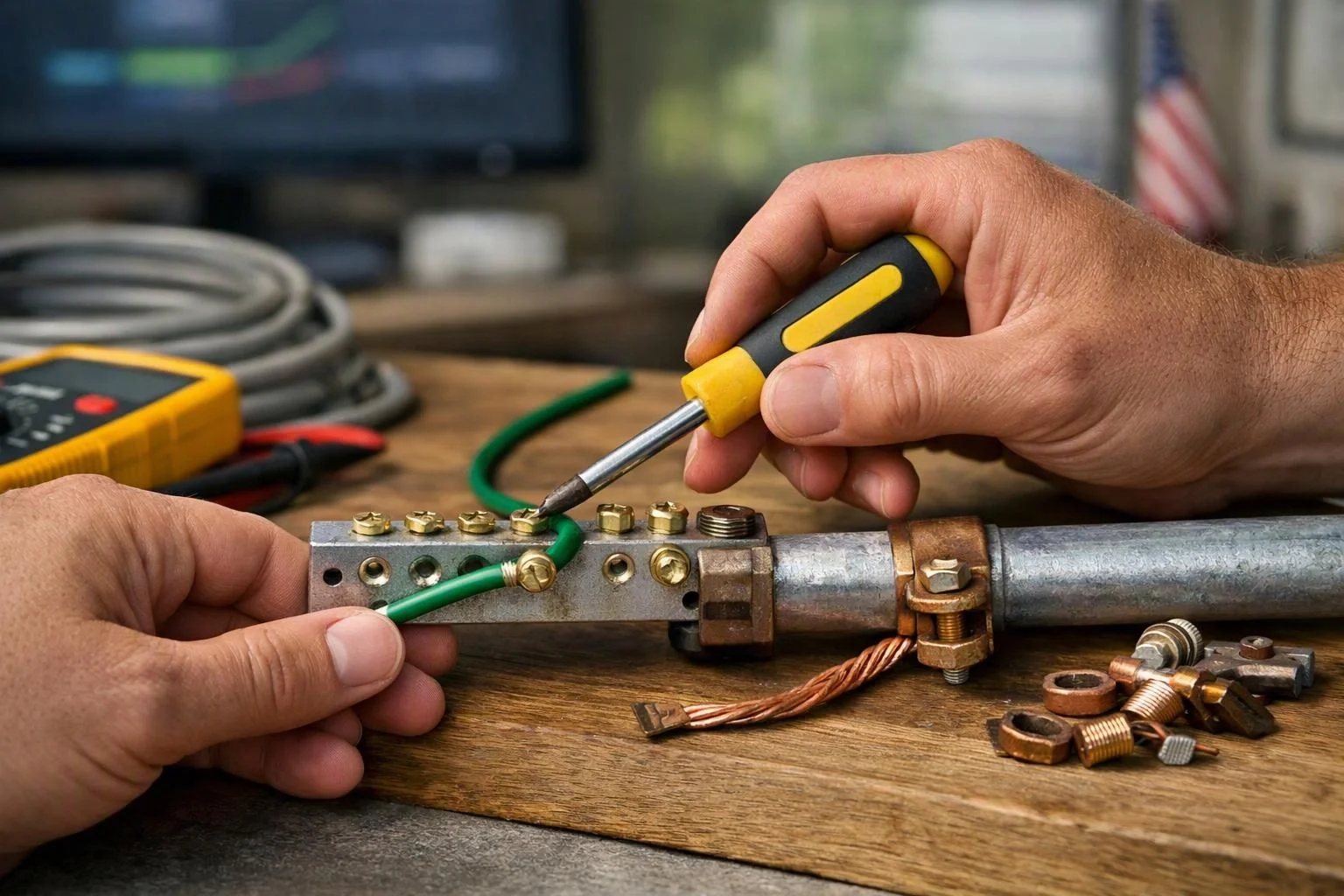
Bonding joins conductive parts with a conductor or approved connection point. The connection may include metal enclosures, raceways, service equipment, or other conductive components. If a fault energizes one of these parts, the bonded path helps carry current back toward the source through the electrical system.
Related glossary terms: Grounding Electrode, Continuity Test, Load Center.
Bonding is checked through visual inspection and electrical testing. A technician looks for loose connections, damaged conductors, corrosion, and missing links between metal parts. A bonding jumper may connect sections that would otherwise lose continuity across a fitting or removable component. Grounding connects the system to earth, while bonding connects conductive parts to support a common electrical path.
From the Service Electric team
When we inspect bonding, we trace connections between service equipment, metal enclosures, raceways, and other conductive parts. We look for secure terminations and use testing when visual inspection cannot confirm continuity. Our team records bonding concerns as part of an Electrical Safety Inspection so the condition can be addressed clearly.
Bonding in Practice: A Real-World Example
During an Electrical Safety Inspection, a technician examines the metal enclosure at a service panel and checks whether connected metal components have a reliable bonding path. A loose or missing connection can require correction before the inspection is complete.
Related Services
Related Terms
Grounding Electrode
A grounding electrode is a conductive object that connects an electrical system to the earth. The…
Continuity Test
A continuity test is an electrical check that determines whether a complete conductive path exists between…
Load Center
A Load Center is an enclosure that receives electrical power and distributes it through circuit breakers…
Service Entrance
A service entrance is the point where electrical power enters a building from the utility system…
Service Electric
Have Questions About Bonding?
Contact Service Electric for practical guidance on Bonding and related 24 hour electrician work in Victoria.