
What Is a Fuse?
A fuse is an overcurrent protection device that contains a metal element designed to melt when electrical current exceeds its rated limit. The melted element opens the circuit and stops current from reaching downstream wiring and equipment. A fuse must be replaced after operation because the protective element cannot be reset.
Quick Facts About Fuse
Category
Overcurrent protection device
Used for
Protecting wiring and electrical equipment
Common confusion
A fuse cannot be reset after it operates
Also called
Fuse link
Often discussed with
Circuit Breaker Repair, Electrical Troubleshooting
Key Takeaways About Fuse
- A fuse opens a circuit by melting a metal element.
- A used fuse requires replacement with the correct type.
- A fuse is not the same as a resettable breaker.
How Fuse Works
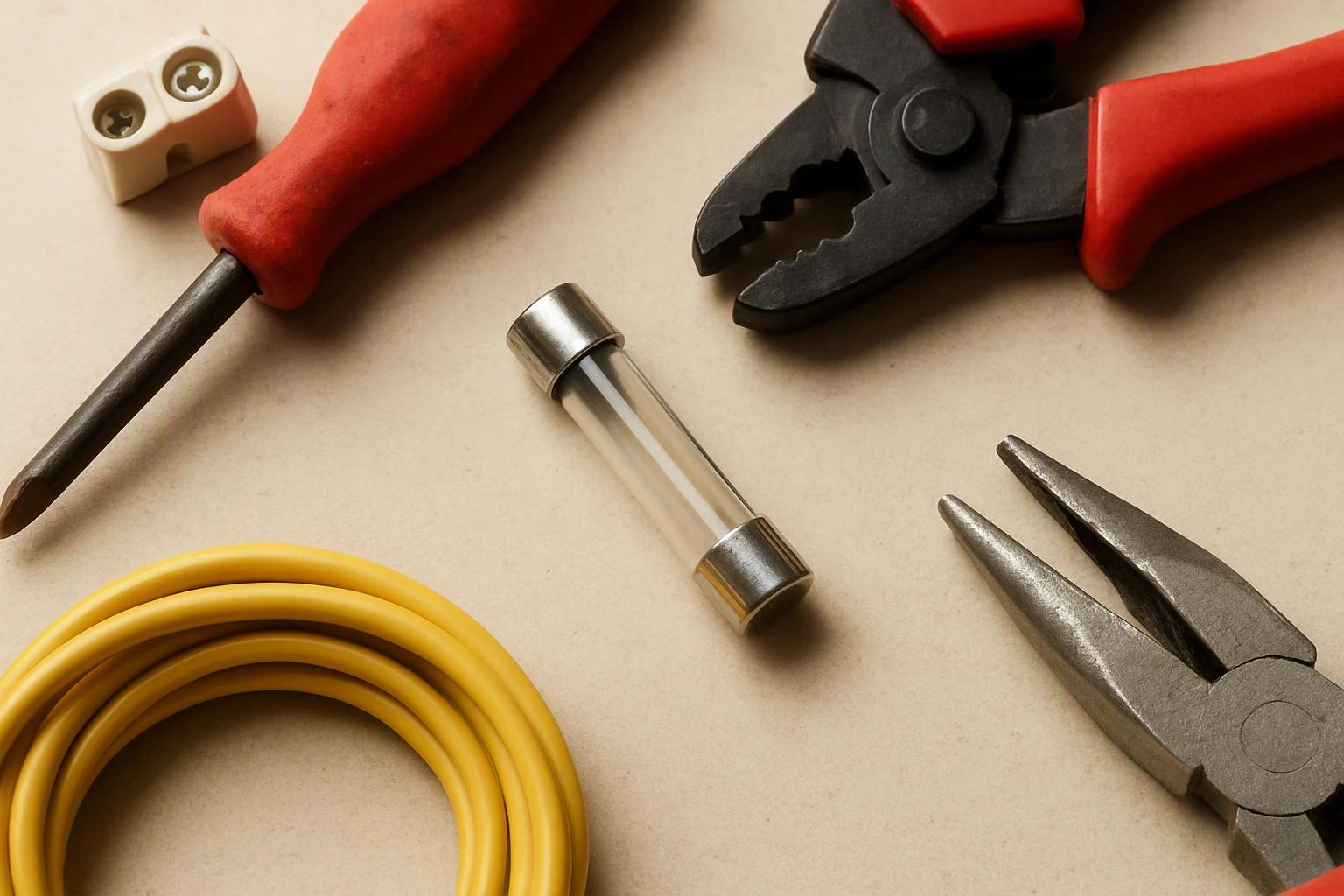
A fuse carries current through a calibrated metal element. Excessive current heats that element until it melts and creates an open circuit. The open circuit interrupts power to the protected branch, which limits damage to wiring and connected equipment. Fuse markings identify the electrical characteristics that the replacement must match.
Related glossary terms: Current Draw, Electrical Load, Load Center.
A circuit breaker performs a similar protective job but uses a switching mechanism that can be reset after it trips. A fuse requires physical replacement after the element opens. The fault may come from an overload, a short circuit, or a problem in connected equipment. Replacing the fuse without addressing the cause can lead to another operation.

From the Service Electric team
When we inspect a fuse, we check its type and rating before examining the holder and connected wiring. Our team also looks for signs of overheating and tests the circuit for the condition that caused the fuse to open. We do not treat replacement as a complete repair when the underlying fault remains.
Fuse in Practice: A Real-World Example
A fuse serving an older kitchen circuit opens when several appliances operate together. An electrician checks the connected load, the fuse holder, and the wiring before installing a properly matched replacement.
Related Services
Related Terms
Current Draw
Current Draw is the amount of electrical current a device or circuit takes from its power…
Electrical Load
Electrical Load is the amount of power that connected devices and equipment draw from an electrical…
Load Center
A Load Center is an enclosure that receives electrical power and distributes it through circuit breakers…
Wire Gauge
Wire Gauge is a standardized way to describe a conductor’s diameter and current-carrying capacity. The gauge…
Service Electric
Have Questions About Fuse?
Contact Service Electric for practical guidance on Fuse and related 24 hour electrician work in Victoria.