
What Is a Critical Loads Panel?
A Critical Loads Panel is a separate electrical panel that supplies selected circuits during a utility outage or backup power event. The panel connects chosen loads to a battery system through appropriate switching and distribution equipment. It keeps essential circuits organized, limits backup demand, and separates supported loads from circuits that remain on normal utility power.
Quick Facts About Critical Loads Panel
Category
Backup power distribution equipment
Used for
Supplying selected circuits during outages
Common confusion
Often mistaken for whole-home backup
Also called
Backup Loads Panel, Essential Loads Panel
Often discussed with
Standalone home battery critical-load backup installation
Key Takeaways About Critical Loads Panel
- It serves selected circuits, not automatically every circuit in the home.
- Circuit selection must match the battery system and expected electrical demand.
- It is not the same as a whole-home backup panel.
How Critical Loads Panel Works
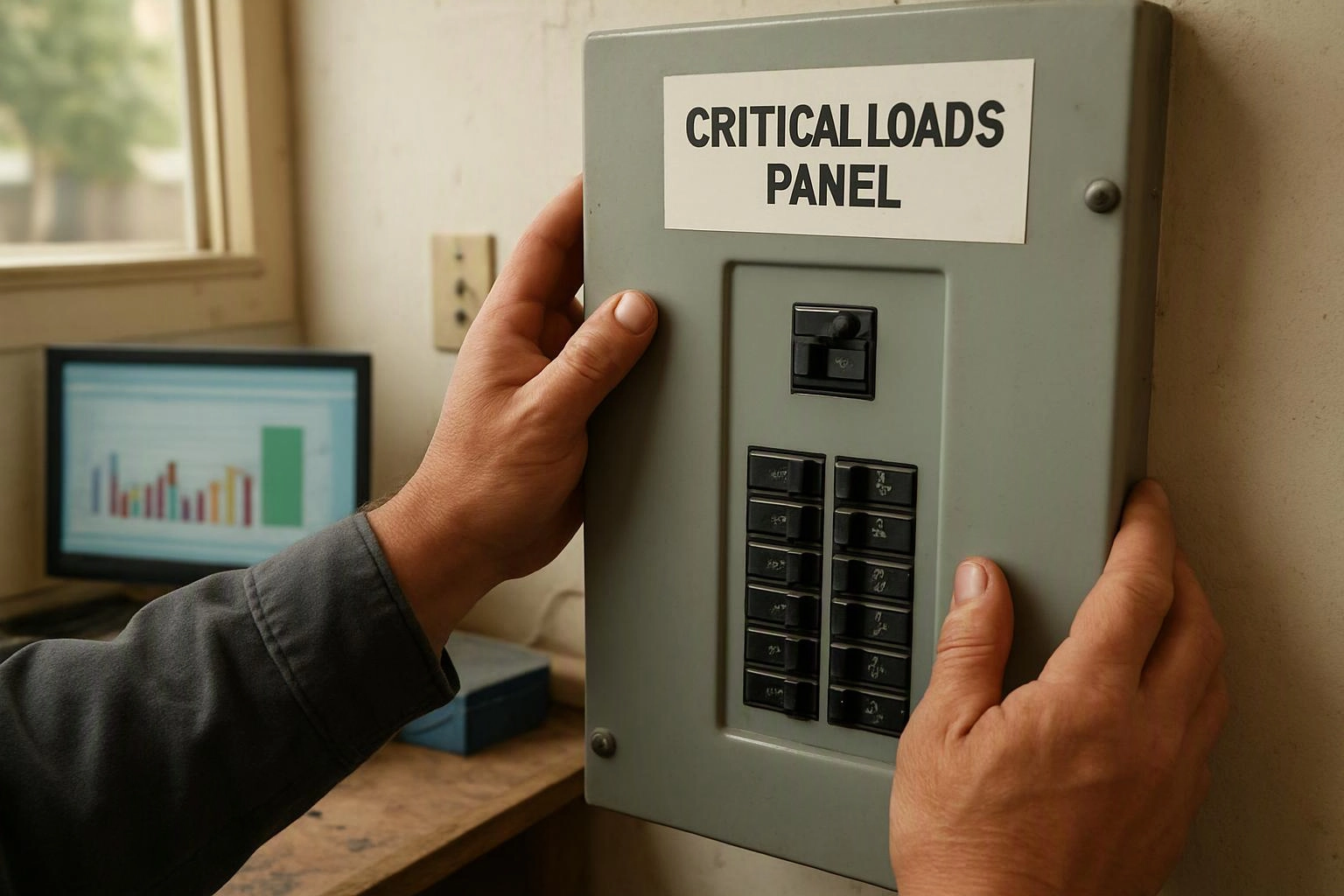
A Critical Loads Panel receives power from a battery system through an inverter and related transfer equipment. During normal operation, supported circuits may receive power from the utility. During an outage, the system changes the power source so the selected circuits can continue operating when the battery has available capacity.
Related glossary terms: Battery Energy Storage, Bidirectional Inverter, Transfer Switch.
An electrician moves designated branch circuits into the panel and labels each circuit clearly. Common choices include refrigeration, lighting, communications equipment, or selected receptacles. The panel does not increase the battery's stored energy. It organizes the backup supply so connected loads stay within the system's operating limits.
A bidirectional inverter can manage power flow between the battery and the home's electrical system. A transfer switch helps separate backup circuits from utility power during an outage. The final circuit arrangement depends on the home's wiring, battery equipment, and the loads the property owner wants to support.
From the Service Electric team
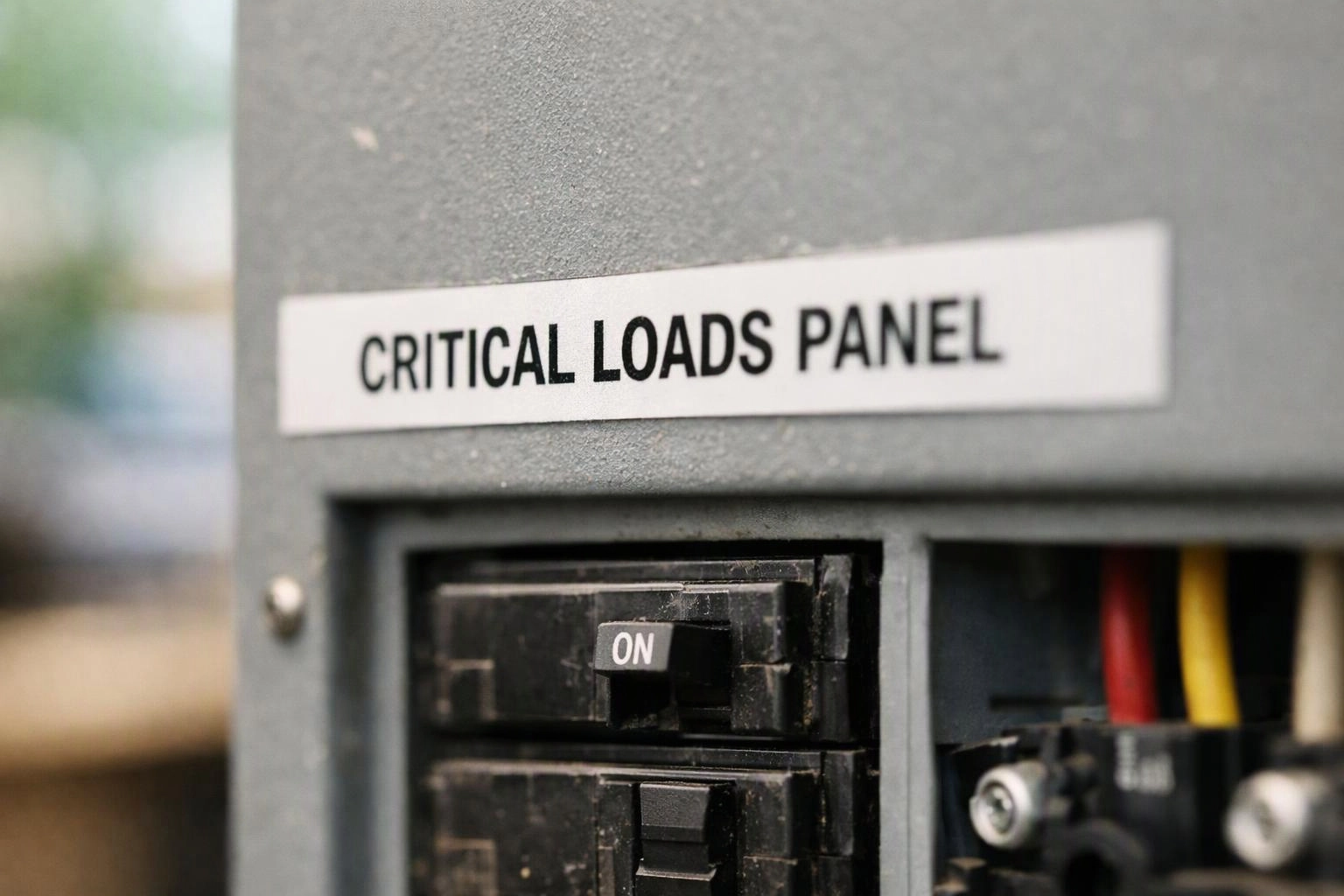
When we install a critical-load backup system, we review the existing panel and identify circuits that the battery can support. We check conductor routing, panel space, circuit labels, and the interaction between the battery, inverter, and transfer equipment. We also verify that the selected circuits match the intended backup use.
Critical Loads Panel in Practice: A Real-World Example
A Victoria, Texas homeowner may place refrigerator, selected lighting, and internet equipment circuits on a Critical Loads Panel. During an outage, those circuits receive battery-backed power while larger household loads remain outside the backup group.
Related Terms
Battery Energy Storage
Battery Energy Storage is a power system that stores electricity in rechargeable batteries and releases that…
Bidirectional Inverter
A bidirectional inverter is a power-conversion device that moves electrical energy in either direction between direct-current…
Transfer Switch
A Transfer Switch is an electrical switching device that connects selected building circuits to an alternate…
Electrical Load
Electrical Load is the amount of power that connected devices and equipment draw from an electrical…
Service Electric
Have Questions About Critical Loads Panel?
Contact Service Electric for practical guidance on Critical Loads Panel and related 24 hour electrician work in Victoria.