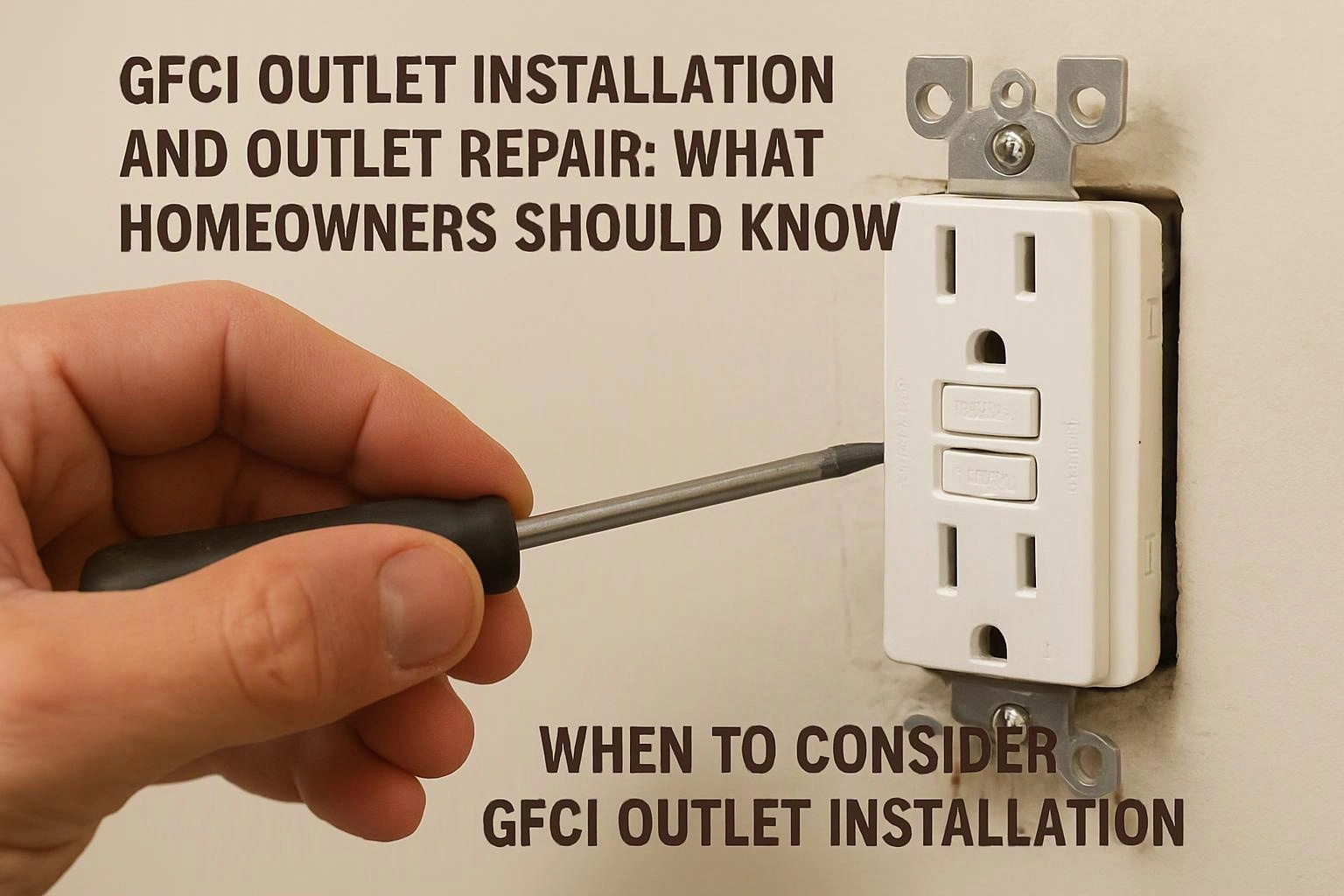
GFCI Outlet Installation and Outlet Repair: What Homeowners Should Know
GFCI outlet installation matters where electrical codes address shock risks from moisture or grounding; these entries differ in current rating, wiring features, and design details.
Request an EstimateQuick Picks
The Leviton outlet is a 15A, 125V, four-pack with a slim profile, self-test protection, and status feedback. The Eaton receptacle is a 20A, 125V self-test model for residential and commercial use with back-and-side wiring. Kitchens, bathrooms, laundry areas, garages, and outdoor locations are common installation areas, with indoor and outdoor outlet requirements varying by environment.
- 15 Amp 125-Volt Duplex Self-Test Slim GFCI Outlet, Ivory, 4-Pack, GFNT1-R4I — Leviton 15 Amp 125-Volt Duplex Self-Test Slim GFCI Outlet, Ivory, 4-Pack, GFNT1-R4I provides continuous ground fault protection.
- Eaton GFCI receptacle — Eaton GFCI receptacle is a self-test, 20A, 125V, GFCI receptacle designed for residential and commercial use, with back and side wire wiring method, and is available in almond color with brass contacts.
| Name | Current rating | Voltage | Self-test design | Wiring method | Color |
|---|---|---|---|---|---|
| 15 Amp 125-Volt Duplex Self-Test Slim GFCI Outlet, Ivory, 4-Pack, GFNT1-R4I | 15A | 125V | Self-test | Terminals; external back wire clamps | Ivory |
| Eaton GFCI receptacle | 20A | 125V | Self-test | Back and side wire | Almond |
1. 15 Amp 125-Volt Duplex Self-Test Slim GFCI Outlet, Ivory, 4-Pack, GFNT1-R4I
Leviton 15 Amp 125-Volt Duplex Self-Test Slim GFCI Outlet, Ivory, 4-Pack, GFNT1-R4I is intended for installations that need a slim, self-test GFCI receptacle. Leviton states that it provides continuous ground fault protection, exceeds UL requirements for auto-monitoring, and is compatible with all Decora devices and wall plates. A status indicator light provides feedback on power and protection status, while a patented lockout action prevents reset if the GFCI is damaged.
Its reduced depth is designed to make installation easier in shallow electrical boxes. The receptacle is designed to minimize false triggers and includes terminals for wiring options, external back wire clamps that provide visual indication of proper wire seating, a standard brass self-grounding clip, and construction that withstands high torque and resists wire pullout. The package contains four ivory 15A, 125V duplex outlets.
Best for: This entry is intended for residential electrical installations using 15A, 125V duplex GFCI outlets, including installations with shallow electrical boxes or Decora devices and wall plates.
Pros:
- Website: store.leviton.com
2. Eaton GFCI receptacle
The Eaton GFCI receptacle is a self-test model for residential and commercial use. Eaton states that it has a 20A, 125V rating, back-and-side wire wiring, an almond color, and brass contacts. Its dimensions are 2.823 inches in length, 4.635 inches in height, and 2.01 inches in width.
This receptacle weighs 0.425 pounds and has a torque rating of 16 lbf-inch. The self-test design provides a built-in testing feature for the receptacle.
Best for: This entry is intended for residential and commercial installations using a 20A, 125V GFCI receptacle.
Pros:
- Website: eaton.com
How to Choose When to Consider GFCI Outlet Installation
FAQ
When should GFCI outlets be installed in a home?
GFCI outlets are commonly installed in kitchens, bathrooms, laundry areas, garages, and outdoor locations. Electrical codes require them where there is a risk of electrical shock from moisture or grounding. Locations that are wet or exposed to weather also require WR outlets, while TR outlets are stated for indoor areas where children can reach the outlets.
How do I determine if my home meets GFCI requirements?
Compare each location with the applicable electrical-code conditions, especially areas where moisture or grounding can create a shock risk. Check the circuit layout, outlet placement, line and load connections, and wiring accuracy. An electrician can assess those connections and test the outlet to confirm that it trips and resets properly.
How do I verify that a GFCI outlet is properly installed?
Proper installation includes accurate wiring, secure connections, and correct use of the line and load terminals. The outlet should be tested to confirm that it trips and resets properly. Incorrect wiring may allow power to flow without protection, so professional installation can confirm correct operation.
What are the differences between GFCI outlets and standard outlets?
GFCI outlets monitor differences in current between the hot and neutral wires and interrupt power within 1/40 of a second when an imbalance occurs. They are intended to shield people from electric shock during ground faults or leakages and are used especially where water and electricity may come into contact. The entries here add self-test designs, while the Leviton model also lists a status indicator and lockout action.
What should I do if I suspect a GFCI outlet is not functioning?
Test the outlet regularly and check it every month, as manufacturers advise, because wear or power fluctuations can affect protection. If it does not trip or reset properly, ask an electrician to check the wiring, circuit layout, line and load connections, and outlet operation.
How do I know if I need a 15A or 20A GFCI outlet?
Compare the circuit requirements with the receptacle rating before buying. The Leviton entry is rated at 15A and 125V, while the Eaton entry is rated at 20A and 125V. An electrician can assess the circuit layout and identify the appropriate connections.
What are the rules for installing GFCI outlets?
Installation should account for electrical-code requirements in areas exposed to moisture or grounding risks, the outlet environment, and the circuit layout. Indoor outlets in residential areas that children can reach must be TR, while wet or weather-exposed areas need WR equipment. Connections should use the correct terminals, and the completed installation should be tested for proper tripping and resetting.
Next Steps
Before buying, confirm the circuit rating, voltage, wiring method, and installation environment with an electrician. Ask whether the location calls for TR or WR equipment and whether the selected receptacle matches the circuit layout and line and load connections. Confirm that the installer will secure the connections and test the outlet so it trips and resets properly. Continue regular testing after installation, including the monthly checks manufacturers advise.
Last updated October 2026
Related Resources
Emergency Electrician Cost Factors: What Affects 24-Hour Electrical Repair Pricing
What to AvoidEmergency Electrical Repair Mistakes: What Not to Do During a Power Problem
When You Need ItElectrical Safety Before and After Severe Weather or Water Damage
Everything About ItWhat to Expect During a 24-Hour Electrical Service Call