Standard vs Premium Emergency Electrical Repair Systems & Materials Compared (2026)
Emergency electrical repair systems differ in material durability, protection, maintenance, and repair fit. Service Electric evaluates the damaged system, explains the trade-offs, and recommends the repair approach that fits the electrical risk, property conditions, and system demands.
Request an EstimateWhat Makes an Emergency Electrical Repair System Standard or Premium?
A standard emergency electrical repair system restores necessary operation with suitable components. A premium repair system adds higher material performance, protection, durability, or monitoring where the repair requires it.
Our team compares electrical materials with the fault, system compatibility, environmental exposure, and electrical safety in mind. We do not treat premium materials as automatically better for every repair.
Standard vs Premium Emergency Electrical Repair Systems at a Glance
Standard systems generally prioritize essential function and practical replacement. Premium systems prioritize enhanced protection, durability, and lifecycle performance.
- Standard systems fit essential restoration when compatible, standard-rated components meet the repair requirements.
- Premium systems fit repairs where added protection, environmental resistance, or durability addresses a documented need.
| Factor | Option A: Standard System | Option B: Premium System |
|---|---|---|
| Cost | Usually lower material and installation cost when suitable components meet the repair requirement | Usually higher material and installation cost because enhanced components and features require more investment |
| Timeline | Can support a straightforward repair when compatible parts are available | Can require additional selection, configuration, or installation work |
| Maintenance | Requires routine inspection and replacement of worn or damaged components | May reduce replacement pressure through more durable components but still requires inspection and maintenance |
| Best for | Essential restoration where standard-rated materials adequately address the electrical fault | Repairs where added protection, environmental resistance, durability, or system performance justifies the added investment |
Repair suitability depends on the fault, the environment, the electrical load, and the condition of nearby components. We use those factors to guide material selection.
What Are the Advantages of a Standard Emergency Electrical Repair System?
A standard emergency electrical repair system is useful when compatible, code-appropriate components can restore safe operation without added system features.
Best for: Essential repairs where standard-rated materials meet the safety and performance requirements.
When Is a Premium Emergency Electrical Repair System Worth Considering?
A premium emergency electrical repair system is worth considering when the property, electrical load, environment, or consequence of failure calls for protection or durability beyond essential restoration.
Premium materials can support demanding environments through improved resistance to heat, moisture, corrosion, vibration, or physical wear. We assess whether those conditions affect the repair area.
Enhanced protective devices can help address specific hazards when they are compatible with the system and appropriate for the fault. Our team reviews the existing equipment, wiring condition, load characteristics, and repair objective before recommending added features.
What Are the Advantages of a Premium Emergency Electrical Repair System?
A premium emergency electrical repair system can provide added durability, protection, or resilience when those improvements match the electrical risk and property conditions.
Best for: Repairs where environmental stress, electrical risk, equipment sensitivity, or lifecycle performance makes enhanced materials appropriate.
Which Repair Materials Should Be Compared Before Work Begins?
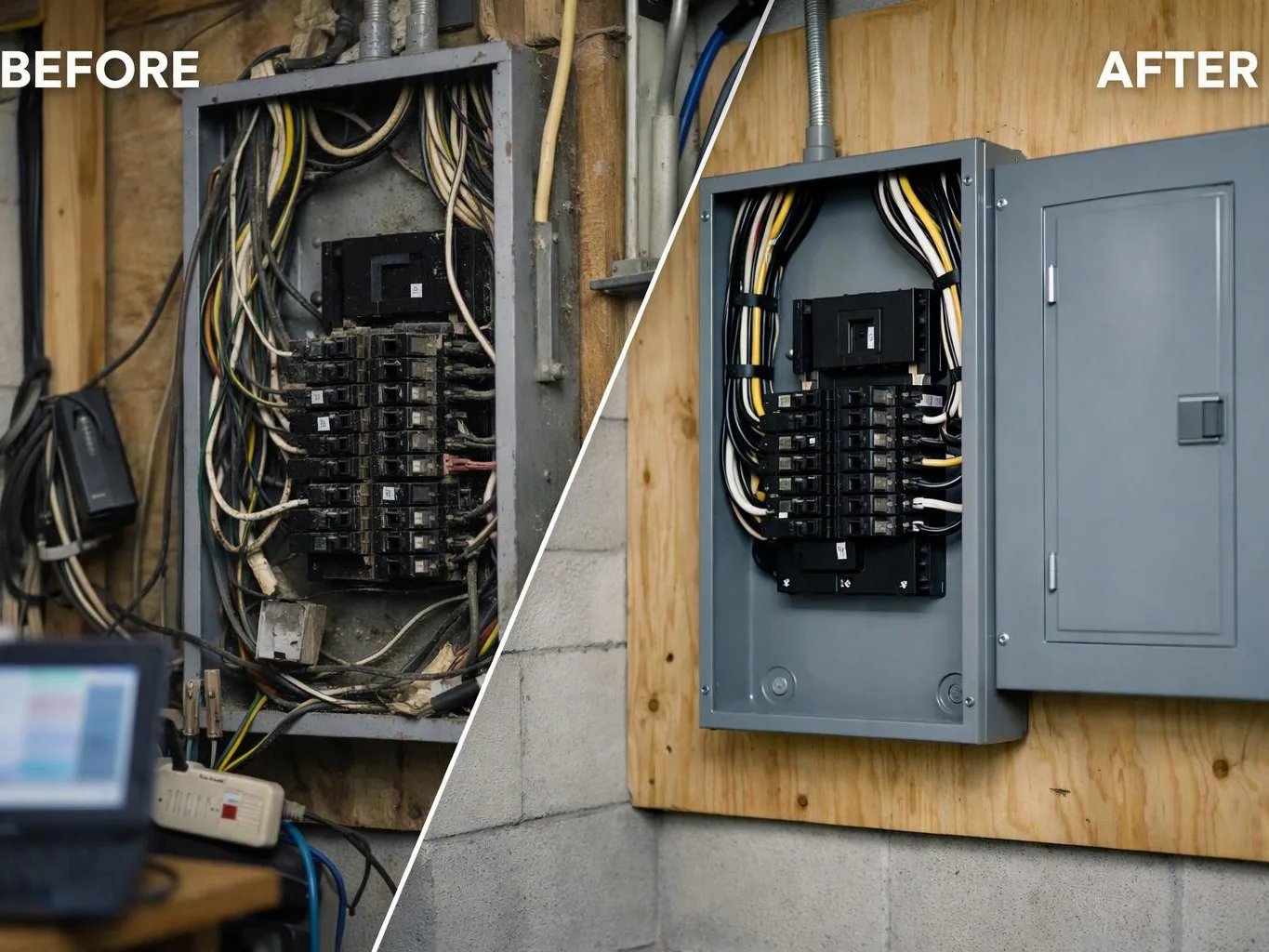
The repair materials that deserve comparison are the components directly affected by the fault, including protective devices, conductors, connections, enclosures, wiring methods, and grounding components.
Circuit breakers and fuses should match the circuit design, fault conditions, and equipment requirements. Electrical conductors, wire connectors, electrical boxes, and conduit should match the installation environment and electrical load.
Receptacles, switches, surge protection, and grounding and bonding components should be evaluated for compatibility, condition, exposure, and intended use. We check failed components and surrounding electrical connections so the selected materials address the cause and not only the visible symptom.
How Does Service Electric Decide Between Standard and Premium Materials?
Service Electric decides between standard and premium materials by matching the repair recommendation to the fault, system condition, electrical risk, environment, compatibility, and expected use.
What Changes the Cost of a Standard or Premium Emergency Electrical Repair?
The cost changes with the fault location, diagnostic work, material type, labor complexity, access conditions, related damage, compatibility requirements, and added protection or system improvements.
Standard and premium options can differ in material cost, installation complexity, and the amount of system work required. Concealed wiring, damaged connections, difficult access, or related component failure can require more work than a direct component replacement.
We explain what the repair quote covers, including diagnosis, materials, installation, testing, and recommended corrective work. Request a quote through Emergency Electrical Repair so we can assess the actual repair conditions.
How Can You Choose the Right Emergency Electrical Repair System?
Choose the standard system when it safely meets the repair requirement, and consider the premium system when added protection, durability, or resilience addresses a documented need.
The lowest material cost is not the only decision factor because compatibility, safety, access, maintenance, and failure consequences also affect the repair. Our team helps you weigh immediate restoration against material performance and future maintenance before work begins.
What Should You Do When an Electrical Fault Needs Emergency Repair?
An electrical fault that creates sparking, smoke, burning odor, overheating, repeated tripping, or shock risk requires you to stop using the affected equipment and contact Service Electric for emergency electrical repair.
What Should Be Checked After an Emergency Electrical Repair?
After an emergency electrical repair, the repaired components, connections, protective devices, grounding path, and circuit operation should be checked for safe and compatible performance.
Our crew checks the repaired area for secure connections, correct component application, visible damage, and signs of continued overheating. We verify that protective devices and repaired circuits operate as intended for the system.
We also explain maintenance or monitoring considerations connected to the selected materials. This repair verification helps confirm circuit performance after the emergency fault is addressed.
Questions About Standard and Premium Electrical Repairs
Can premium electrical materials be installed in an existing system?
Yes, premium electrical materials can be installed in an existing system when the components are compatible with the wiring, protective devices, load, enclosure, and installation conditions. Service Electric checks those factors before recommending an upgrade.
Does a premium repair always improve electrical safety?
No, a premium repair does not always improve electrical safety. Safety depends on correct diagnosis, compatible materials, proper installation, protective device selection, grounding, and system testing.
What happens if standard electrical repair materials are not compatible?
Standard electrical repair materials that are not compatible can create unsafe connections, poor circuit performance, nuisance tripping, or equipment damage. We identify the compatibility problem and recommend materials that match the system.
Can I use an outlet or circuit again after an electrical emergency?
No, do not use an outlet or circuit again when it shows sparking, burning odor, overheating, visible damage, or repeated tripping. Keep the affected area unused until we assess and verify the system.
Should damaged electrical components be repaired or replaced?
Damaged electrical components should be repaired or replaced based on the fault, component condition, compatibility, and safety risk. We inspect the affected part and related connections before making a repair recommendation.
Choose the Right Emergency Electrical Repair Approach
Emergency electrical repair decisions should reflect the fault, electrical risk, property conditions, and future maintenance needs. Service Electric explains the available material options and completes the work that fits the system.
Contact us through our contact page to discuss the damaged circuit or equipment.
Related Resources
Emergency Electrician Cost Factors: What Affects 24-Hour Electrical Repair Pricing
What to AvoidEmergency Electrical Repair Mistakes: What Not to Do During a Power Problem
When You Need ItElectrical Safety Before and After Severe Weather or Water Damage
Everything About ItWhat to Expect During a 24-Hour Electrical Service Call