
What Is Ballast?
Ballast is a component in some fluorescent and high-intensity discharge light fixtures that controls electrical current through the lamp. A ballast helps the lamp start, maintains stable operation, and limits current after ignition. Older fixtures often use magnetic ballasts, while newer systems may use electronic ballasts designed for specific lamp types.
Quick Facts About Ballast
Category
Lighting control component
Used for
Fluorescent and discharge lamps
Common confusion
Often confused with an LED driver
Also called
Light ballast, Electronic ballast
Often discussed with
Indoor Lighting Installation, Electrical Troubleshooting
Key Takeaways About Ballast
- Ballasts are specific to the lamp and fixture design.
- A failing ballast can cause flickering, buzzing, or delayed starting.
- A ballast is not the same component as an LED driver.
How Ballast Works
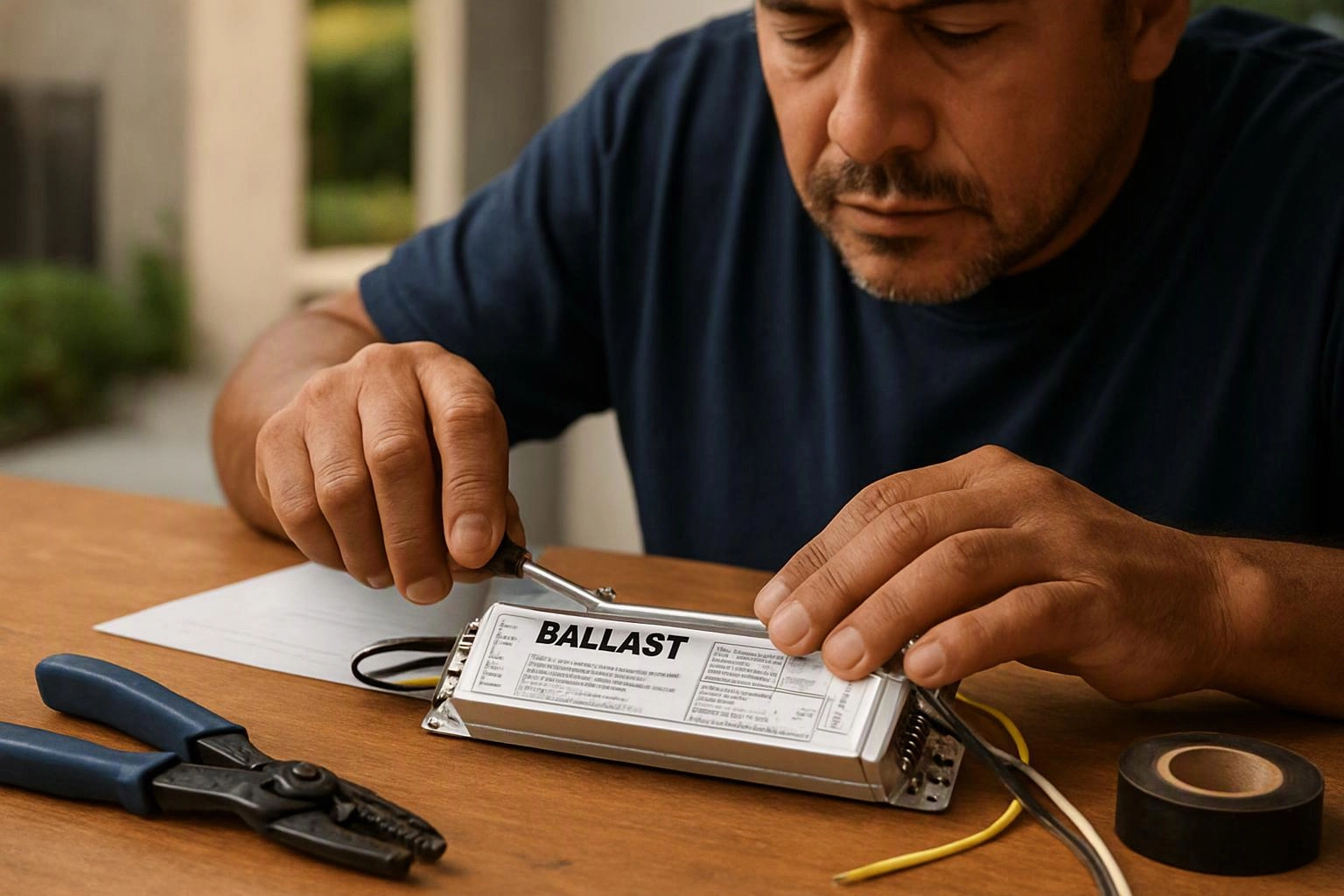
A ballast manages the electrical current supplied to a compatible lamp. During startup, the ballast helps create the conditions needed for the lamp to light. After startup, the ballast limits current so the lamp can continue operating without drawing uncontrolled power.
Related glossary terms: LED Driver, Line Voltage, Current Draw.
Magnetic ballasts use coils and may produce a noticeable hum. Electronic ballasts control current through electronic circuits and commonly support different starting and operating behavior. Fixture symptoms such as flickering, delayed starting, repeated shutdowns, or unusual noise can point to a ballast problem, although a lamp, socket, or wiring fault can produce similar symptoms.
During indoor lighting installation, ballast compatibility depends on the fixture, lamp type, voltage, and wiring arrangement. An electronic ballast must match the lamp and fixture design. LED retrofits may require a compatible LED driver or a different wiring method.
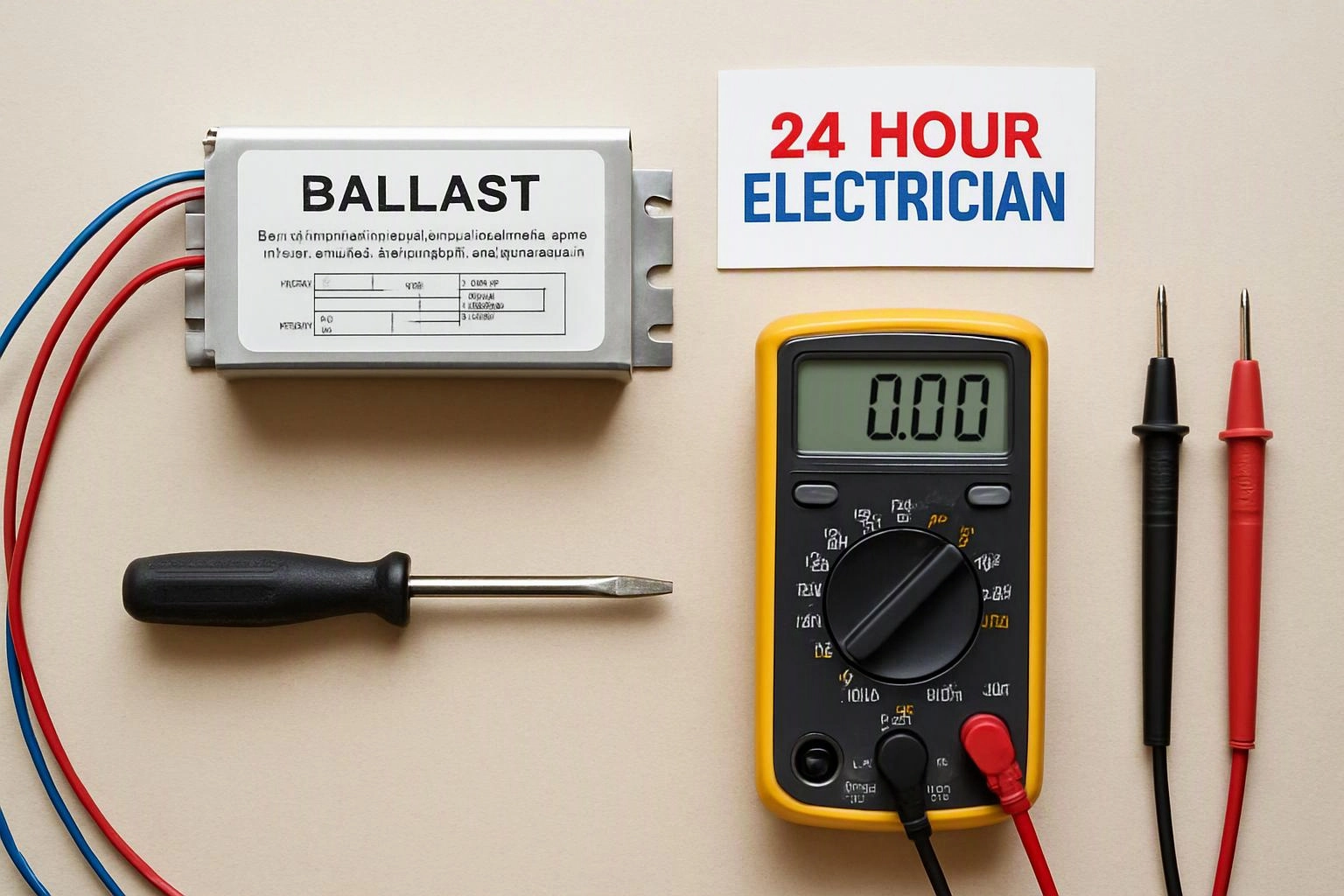
From the Service Electric team
When we inspect a ballast, we check the fixture label, lamp type, wiring condition, and visible signs of heat or damage. We also separate ballast symptoms from problems in the socket, switch, or branch-circuit wiring. Our team confirms compatibility before completing an indoor lighting installation.
Ballast in Practice: A Real-World Example
A fluorescent ceiling fixture in a workshop begins flickering and takes time to start. During an indoor lighting installation, the ballast may be checked alongside the lamps, sockets, and wiring before the fixture receives a compatible replacement component.
Related Terms
LED Driver
An LED driver is an electronic power supply that regulates electricity for light-emitting diodes. The driver…
Line Voltage
Line Voltage is the electrical potential supplied by a power source to a circuit, equipment, or…
Current Draw
Current Draw is the amount of electrical current a device or circuit takes from its power…
Service Electric
Have Questions About Ballast?
Contact Service Electric for practical guidance on Ballast and related 24 hour electrician work in Victoria.